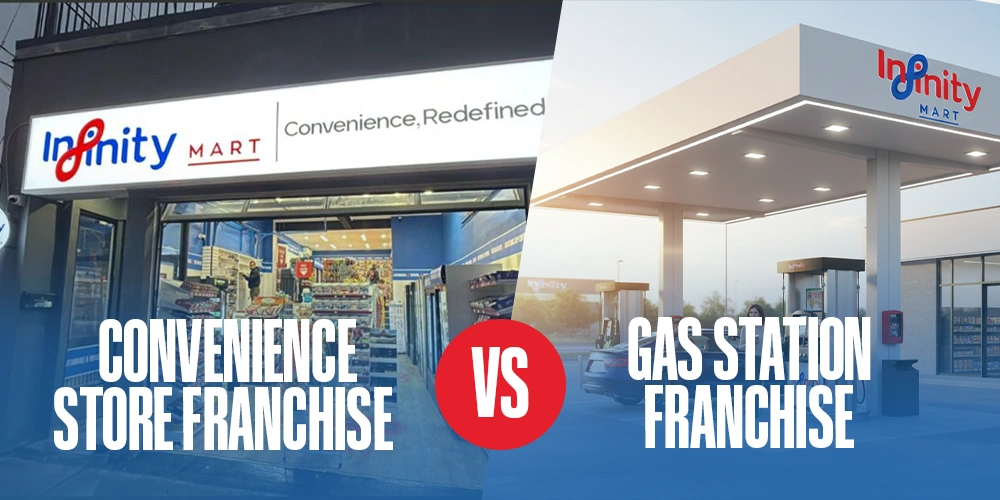
Convenience Store Franchise vs Gas Station Franchise: Which Is the Better Investment?
Entrepreneurs exploring retail opportunities often face a key decision: Convenience Store Franchise vs Gas Station Franchise. Both options offer steady demand and recurring customers, but they differ significantly in cost, operations, and long-term flexibility. Understanding these differences is essential before investing your time and capital.
This comparison breaks down the gas station franchise cost, convenience store ownership benefits, and the real-world pros and cons of each model.
Overview: Convenience Store Franchise
A Convenience Store Franchise focuses on daily essentials such as snacks, beverages, groceries, and household items. These stores thrive on high foot traffic, impulse purchases, and repeat customers.
Convenience Store Franchise Cost
- Lower startup costs compared to gas stations
- No fuel infrastructure or environmental compliance costs
- Flexible store size and location options
- Easier entry for first-time business owners
Benefits of Buying a Convenience Store
- Simplified operations
- Faster setup and approvals
- Higher control over product mix
- Ability to adapt quickly to consumer trends
Buying a convenience store is often seen as a safer and more scalable option for entrepreneurs seeking steady margins without complex regulatory burdens.
Overview: Gas Station Franchise
A Gas Station Franchise combines fuel sales with an attached retail store. While fuel brings consistent traffic, margins on gas are typically low.
Gas Station Franchise Cost
- Significantly higher initial investment
- Underground fuel tanks and compliance costs
- Environmental regulations and inspections
- Long-term maintenance expenses
Owning a Gas Station: Pros and Cons
Pros
- Guaranteed demand for fuel
- Strong brand recognition (depending on supplier)
- Additional income through attached convenience retail
Cons
- Low fuel profit margins
- High operational and maintenance costs
- Environmental liability risks
- Dependence on fuel price fluctuations
Gas stations can be profitable but require careful financial planning and operational experience.
Convenience Store Franchise vs Gas Station Franchise: Key Differences
Startup Investment
- Convenience Store Franchise: Lower cost, fewer technical requirements
- Gas Station Franchise: High upfront investment and ongoing compliance expenses
Operational Complexity
- Convenience Store Franchise: Easier to manage and staff
- Gas Station Franchise: Requires fuel management, inspections, and safety protocols
Profit Margins
- Convenience Store Franchise: Higher margins on food, beverages, and impulse items
- Gas Station Franchise: Low margins on fuel, profits depend on store sales
Scalability
- Convenience Store Franchise: Easier to expand to multiple locations
- Gas Station Franchise: Expansion is capital-intensive and slower
Which Franchise Model Is Better in 2026?
In 2026, consumer behavior is shifting toward quick, convenient shopping experiences. While fuel demand remains stable, modern convenience stores are evolving into lifestyle hubs offering fresh food, coffee, and 24/7 access.
For many investors, owning a convenience store provides:
- Lower financial risk
- Faster break-even periods
- Greater flexibility
- Stronger long-term scalability
Gas stations may suit experienced operators, but convenience store franchises are increasingly attractive to new and growing entrepreneurs.
Why Infinity Mart Stands Out Among Convenience Store Franchises
Among today’s convenience store brands, Infinity Mart offers a modern, franchise-friendly model designed for long-term success.
What Makes Infinity Mart Different
- Competitive Convenience Store Franchise Cost
- No fuel dependency or environmental liabilities
- Proven operational systems and branding support
- Flexible store formats for urban and suburban markets
- Strong focus on customer convenience and product variety
Compared to gas station franchises,Infinity Mart allows entrepreneurs to focus on retail growth without the complexities of fuel operations.
Final Thoughts
When comparing a Convenience Store Franchise vs Gas Station Franchise, the right choice depends on your budget, risk tolerance, and growth goals. Gas stations require higher investment and carry more operational risk, while convenience stores offer flexibility, scalability, and stronger retail margins.
For entrepreneurs seeking a future-ready retail business, Infinity Mart delivers a smarter, more accessible path to franchise ownership without the challenges of fuel-based operations.
Table of Contents
Related post