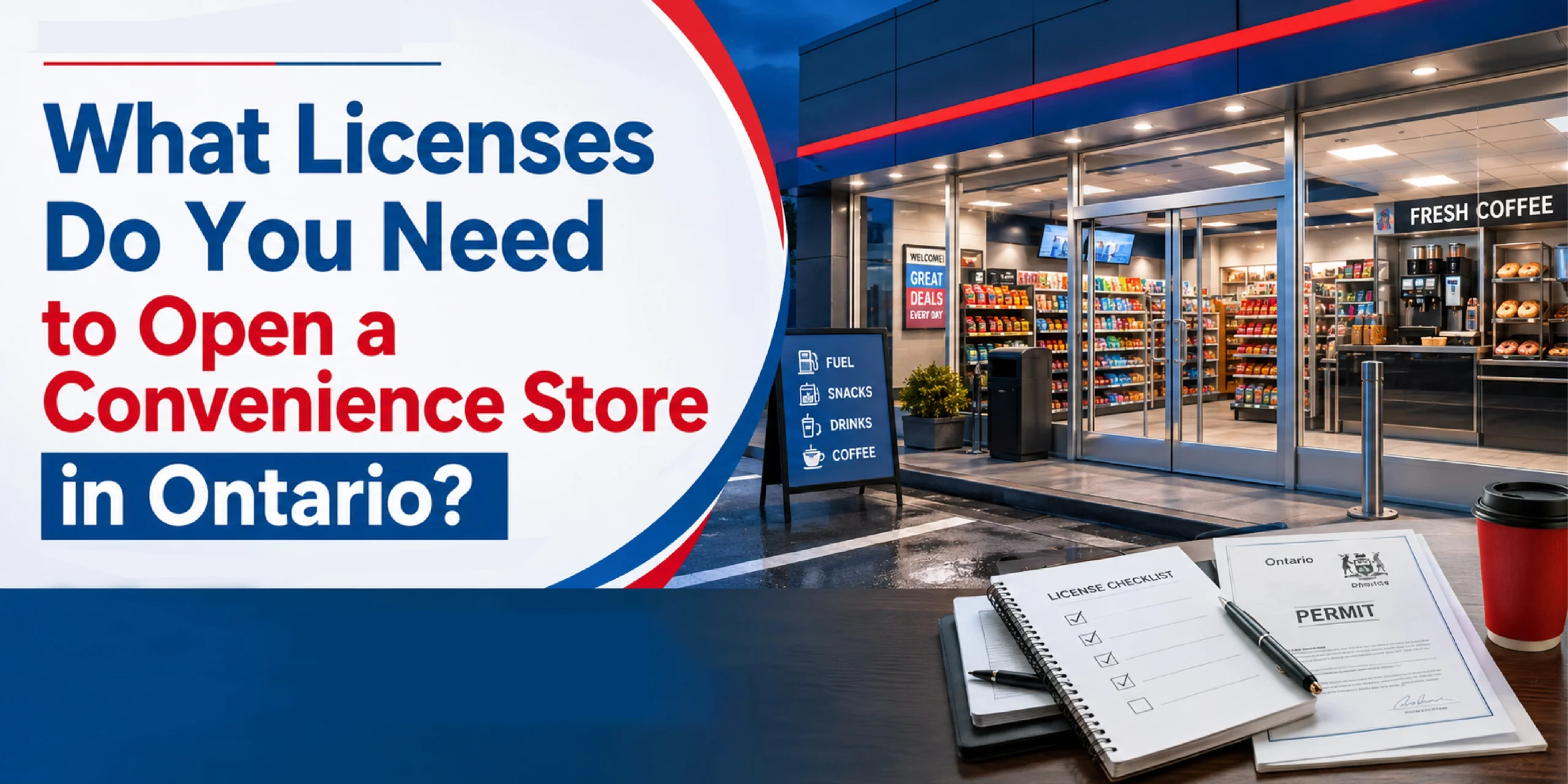
What Licenses Do You Need to Open a Convenience Store in Ontario?
Q: How many licenses does a convenience store in Ontario actually need? A: Most stores require at least 6 to 8 separate registrations before serving their first customer.
Q: What is the single most overlooked permit? A: Ontario’s tobacco retail dealer registration — missing it triggers fines up to $100,000 for a first offence.
Q: Do all Ontario municipalities require a business licence? A: Yes. Every city and township issues its own business licence separately from provincial registrations.
Q: How long does the full licensing process take? A: Plan for 8 to 14 weeks when all applications run in sequence, longer if inspections are backlogged.
Opening a convenience store in Ontario requires a minimum of six licences and registrations: a municipal business licence, Ontario Business Registry number, Retail Sales Tax vendor permit, tobacco retail dealer registration, lottery terminal retailer authorization, and a food handler certification if perishables are sold. Stores selling alcohol through LCBO agency partnerships need a separate authorization. The full process typically takes 8 to 14 weeks.
Introduction
Ontario convenience store owners must secure at minimum six distinct licences before opening day, and the number rises to eight or more once tobacco, lottery, and food safety requirements are counted. Ontario’s regulatory framework splits licensing across three levels of government federal, provincial, and municipal, which means missing one layer can halt operations even after the others are approved.
The regulatory environment in Ontario is more layered than most provinces. Unlike western Canadian provinces that consolidate small-business permits through a single portal, Ontario routes each registration through a separate ministry or agency. First-time owners consistently underestimate this complexity, and many face delayed opening dates as a result.
Register Your Business with the Ontario Business Registry
The Ontario Business Registry (OBR) is the mandatory starting point for every convenience store in Ontario. Registration through Service Ontario costs $60 for a sole proprietorship and $300 for an incorporated business as of 2024, and it generates the Business Identification Number (BIN) required by nearly every other application in this list.
Sole proprietors operating under their legal name are technically exempt from Business Name Registration, but they still need the BIN for tax accounts and supplier agreements. Any store operating under a trade name “Infinity Mart,” “Corner Market,” or any name other than the owner’s full legal name must register that name within 60 days of first use. Failure to register results in the business losing the legal right to sue under that name in Ontario courts.
Incorporation through the OBR provides an additional layer of personal liability protection that sole proprietorship does not. Most convenience store lawyers and accountants recommend incorporation for stores projecting over $100,000 in annual revenue, because the personal tax advantages and liability separation typically outweigh the higher registration fee within the first operating year.
Open a CRA Business Account and Register for HST
The Canada Revenue Agency (CRA) requires every business earning over $30,000 in annual revenue to register for a Goods and Services Tax / Harmonized Sales Tax (GST/HST) account. Convenience stores cross that threshold within weeks of opening, which means registration should happen before the first sale, not after.
Registration is free and can be completed online through the CRA My Business Account portal. The account generates a 9-digit Business Number (BN) that becomes the root identifier for all federal tax obligations, including payroll deductions if the store employs staff. Ontario’s HST rate is 13%, applied to most non-food items sold in a convenience store. Groceries are zero-rated, but confectionery, carbonated drinks, and single-serving snacks under a certain size threshold are taxable, a distinction that matters for accurate point-of-sale programming.
Obtain Your Municipal Business Licence
Every municipality in Ontario Toronto, Mississauga, Brampton, Hamilton, Ottawa, and every smaller township issues its own business licence for retail operations. The fee, process, and timeline vary by city. Toronto charges between $140 and $300 annually depending on store size. Smaller municipalities may charge as little as $75 but require an in-person visit to complete the application.
The municipal licence application typically triggers two inspections: a fire safety inspection by the local fire department and a zoning compliance review by the municipal planning department. Zoning confirmation is critical. Ontario’s Planning Act restricts certain retail categories by zone, and a convenience store on a residentially zoned lot without a commercial overlay will be refused regardless of how many other licences are in hand.
Submit the municipal application before or alongside the provincial steps, because inspection scheduling in larger cities like Toronto or Ottawa can add three to five weeks to the timeline. Starting this process last is the most common reason opening dates slip.
Register as a Tobacco Retail Dealer
Ontario’s Smoke-Free Ontario Act, 2017 requires every retailer who sells tobacco products to register with the Ministry of Health as a tobacco retail dealer. Registration is free and is processed through ServiceOntario. The certificate must be displayed in a visible location inside the store at all times.
The penalty structure for non-compliance is severe. A first-offence conviction under the Act can result in a fine of up to $100,000 for a corporation. Inspectors from local public health units conduct unannounced compliance checks, and stores without a valid registration certificate are issued immediate stop-sale orders for all tobacco products. Registration takes two to three weeks to process, so apply early in the overall licensing sequence.
Vaping product retailers face an additional layer. Ontario’s Electronic Cigarettes Act, 2015 governs the sale of e-cigarettes and vaping supplies, and while a separate licence is not required, retailers must comply with display restrictions, age verification requirements, and packaging rules that differ from traditional tobacco regulations. Stores planning to carry both categories should review both statutes before setting up their floor plan and signage.
Apply for OLG Lottery Terminal Authorization
The Ontario Lottery and Gaming Corporation (OLG) authorizes convenience stores to host lottery terminals through a Retailer Application process. As of 2024, Ontario has approximately 10,000 authorized lottery retailers, and OLG manages new authorizations based on geographic need and store eligibility criteria.
OLG evaluates applicants on financial standing, physical store size (a minimum floor area applies), proximity to existing authorized retailers, and operating hours. A store must be open at least 12 hours per day to qualify for most terminal types. The application is submitted through OLG’s Retailer Services portal, and the process from submission to terminal installation typically runs six to ten weeks.
Lottery commissions represent a meaningful revenue stream for convenience stores. OLG retailers earn a base commission of 5% on lottery ticket sales plus bonus commissions tied to prize payouts from their terminal. For a mid-volume Ontario convenience store, annual lottery commissions commonly range between $15,000 and $40,000, a figure that makes the application process worth prioritizing early.
Food Handler Certification and Health Inspection
Any convenience store in Ontario selling perishable food sandwiches, cut fruit, hot dogs on a roller grill, or any prepared item requires at least one certified Food Handler on staff and must pass a health inspection from the local public health unit before selling food.
Ontario’s Food Premises Regulation (O. Reg. 493/17) governs all food retail premises. The health inspection assesses refrigeration temperatures, handwashing station placement, food storage practices, and pest prevention systems. Stores that fail the initial inspection receive a compliance order and must schedule a re-inspection, adding weeks to the opening timeline.
Food Handler Certification is obtained through an accredited training provider approved by the local health unit. The course covers temperature control, cross-contamination prevention, and personal hygiene, and typically runs one day. Certification costs between $100 and $200 per person and must be renewed every five years. Posting the certificate behind the counter satisfies the public health unit’s display requirement.
Optional But Common: LCBO Agency Store Authorization
Some Ontario convenience stores operate as LCBO Agency Stores in communities where there is no standalone LCBO location. This designation is granted by the LCBO through a competitive application process and allows the store to sell a limited selection of beer, wine, and spirits on behalf of the LCBO.
Agency store candidates must be located in a community of under 8,000 residents that lacks an LCBO outlet within a reasonable distance. The application requires a detailed store layout, proof of secure storage for alcohol products, and consent from the municipality. Agency stores earn a commission on LCBO sales, which ranges from 10% to 16% depending on product category.
In Ontario’s larger urban centres Toronto, Ottawa, Hamilton agency store authorization is not available. Urban stores interested in alcohol sales must pursue a manufacturer’s retail store endorsement or, in some cases, a grocery store beer and wine authorization, both of which carry different and more complex eligibility criteria.
Comparison: Which Licences Are Mandatory vs. Conditional
| Licence / Registration | Mandatory for All Stores | Conditional |
| Ontario Business Registry (BIN) | Yes | — |
| CRA Business Number / HST Account | Yes | — |
| Municipal Business Licence | Yes | — |
| Tobacco Retail Dealer Registration | Only if selling tobacco | — |
| OLG Lottery Terminal Authorization | Only if hosting lottery | — |
| Food Handler Certification | Only if selling perishables | — |
| LCBO Agency Store Authorization | — | Rural communities only |
| Electronic Cigarettes Compliance | Only if selling vaping products | — |
Key Takeaways
- Ontario convenience stores require a minimum of six licences across three levels of government before opening.
- The Ontario Business Registry BIN must be obtained first nearly every other application requires it.
- Tobacco retail dealer registration is free but carries fines up to $100,000 for non-compliant stores caught selling without it.
- Municipal business licence applications trigger fire and zoning inspections that can add three to five weeks to the timeline.
- OLG lottery terminal authorization takes six to ten weeks and requires a minimum 12-hour daily operating schedule to qualify.
- Food handler certification and a health inspection are required before selling any perishable or prepared food items.
- Begin all applications simultaneously where possible running them in sequence can push the total process past 14 weeks.
Frequently Asked Questions
Q: How much does it cost in total to get all the licences needed for a convenience store in Ontario?
A: Total licensing costs vary by municipality but typically fall between $800 and $2,500 when combining Ontario Business Registry fees, municipal business licence fees, food handler training, and any professional assistance with applications. Provincial licences like tobacco registration are free. Municipal fees are the largest variable cost.
Q: Can I sell lottery tickets on opening day, or does OLG authorization take longer?
A: OLG authorization takes six to ten weeks from a complete application submission. You will not receive a terminal on opening day unless you applied well in advance. Factor this timeline into your launch plan so lottery revenue is not missing from your opening-week projections.
Q: What happens if I sell tobacco without a retail dealer registration in Ontario?
A: A first conviction under the Smoke-Free Ontario Act, 2017 can result in a fine of up to $100,000 for a corporation and up to $50,000 for an individual. Public health inspectors conduct unannounced visits and can issue immediate stop-sale orders for all tobacco products on the premises.
Q: Do I need a separate licence to sell vaping products alongside cigarettes?
A: No separate licence exists specifically for vaping retail in Ontario. However, the Electronic Cigarettes Act, 2015 imposes strict display, packaging, and age-verification rules. Non-compliance can result in fines and product seizure, so stores selling both categories should review both statutes before finalizing their store layout.
Q: Is zoning approval the same as the municipal business licence?
A: No. Zoning confirmation and a business licence are two separate processes within the municipal system. The business licence application triggers a zoning review, but zoning approval is issued by the planning department while the licence is issued by the business licensing office. Both must be confirmed before operations begin.
Q: How long does it take to open a convenience store in Ontario from start to finish?
A: When applications are submitted concurrently and inspections proceed without deficiencies, the minimum realistic timeline is eight weeks. A sequential approach, or any failed inspection requiring re-scheduling, commonly extends this to 14 to 20 weeks. Most experienced operators recommend beginning the process at least four months before the intended opening date.
Q: Does Infinity Mart offer guidance on the licensing process for new convenience store owners?
A: Yes. The Infinity Mart team has direct experience navigating Ontario’s multi-level licensing requirements. Visit https://infinitymart.co/ to learn more about how they support operators through the setup process, from business registration to store layout planning.
Q: Do I need a food premises licence separate from the health inspection?
A: Ontario does not issue a standalone food premises licence. Instead, the local public health unit registers the premises after a successful inspection under the Food Premises Regulation. The registration is renewed annually and can be revoked if subsequent inspections find non-compliance. Display of the current registration certificate is mandatory at all food retail premises.
Opening a convenience store in Ontario involves eight or more licences across three levels of government. Infinity Mart has been helping Ontario operators navigate this process from day one. Visit https://infinitymart.co/ to connect with the team and get clarity on your next step.
Table of Contents
Related post
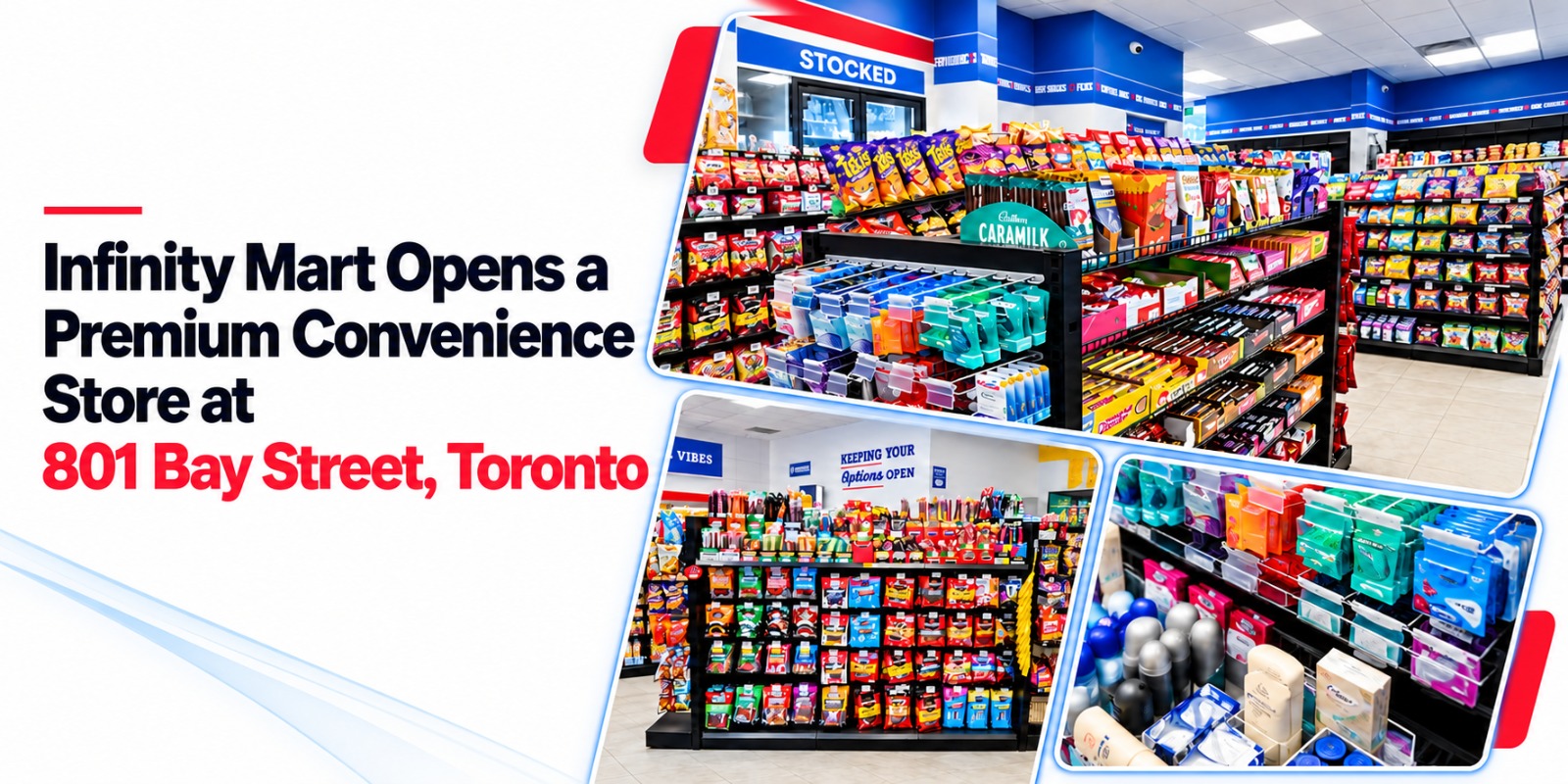
Infinity Mart Opens Premium Convenience Store at Bay Street
September 29, 2026
How Much Money Do You Need to Open a Convenience Store?
September 26, 2026
Infinity Mart Opens New Convenience Store on Portage Ave, Winnipeg
September 8, 2026
Infinity Mart Opens New Convenience Store Near Fort York, Toronto
September 2, 2026