Convenience Store Franchise for Sale in Niagara Falls, ON
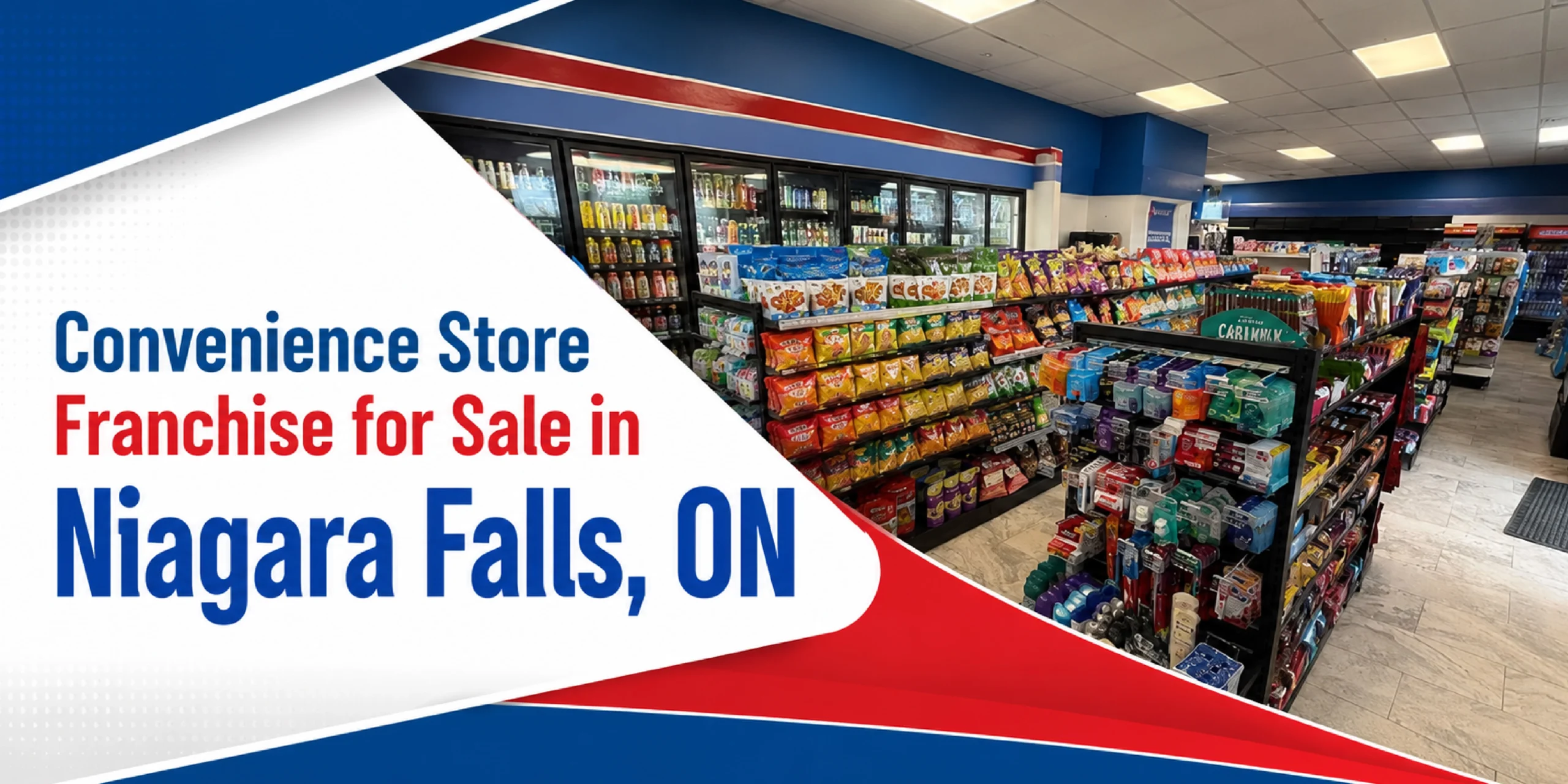
Is there a convenience store franchise for sale in Niagara Falls, ON? Yes. Niagara Falls is an active market for convenience store franchise investment, driven by consistent tourism traffic and steady local demand. A typical convenience store franchise for sale in this region includes territory rights, brand support, and supplier agreements, with total investment varying by location size and lease terms. The sections below cover what a buyer should know before moving forward, including cost ranges, site requirements, and the full franchise process.
Why Niagara Falls Is a Strong Market for a Convenience Store Franchise
Location is the single biggest factor in convenience store performance, and few Ontario markets have the built-in foot traffic that Niagara Falls does.
Tourism Traffic Numbers
The Niagara Region welcomes an estimated 13 to 14 million visitors annually, with roughly 12 million of those visiting Niagara Falls itself, according to Niagara Falls Tourism and Destination Ontario. That volume of visitor traffic translates directly into demand for exactly what a convenience store sells: snacks, drinks, tobacco, lottery products, sundries, and quick meals. Regional tourism spending exceeds 2 billion dollars a year, and the Ontario government’s Destination Niagara Strategy is actively investing in new attractions to extend that traffic across all four seasons rather than just summer.
Year-Round vs. Seasonal Demand
Tourism is heaviest from July through September, with secondary peaks in spring and the winter holiday season around events like the Winter Festival of Lights. A well-placed convenience store benefits from this seasonal surge while still serving a stable base of local residents and commuters during quieter months. This dual demand pattern is one of the reasons convenience retail tends to hold up better in tourism corridors than in purely residential areas.
Local Growth Signals
Niagara is not a static market. New attractions like the Niagara Parks Commission’s flying theatre experience, which drew more than 52,000 visitors and close to 1.2 million dollars in revenue in its first month alone, show that public and private investment in the region is ongoing. Provincial infrastructure upgrades, including improvements to the QEW corridor connecting the Greater Toronto Area to the border, are also expected to increase overall visitor and commuter volume in the years ahead.
What Does a Convenience Store Franchise Cost in Ontario?
Investment ranges vary depending on store size, location, and whether the site requires renovation or is move-in ready.
Typical Investment Range
Convenience store franchise investments in Ontario generally span a wide range depending on the format. A standard-format store typically requires a smaller upfront investment than a location with fuel service or an attached vape retail component. Prospective buyers should request a detailed cost breakdown for the specific Niagara Falls site rather than relying on national averages, since real estate and lease costs in tourism zones can run higher than in purely residential markets.
What’s Included in the Franchise Fee
A franchise fee for a convenience store typically covers territory rights for the surrounding area, brand and trademark use, an initial training program, supplier and distribution agreements, marketing support, and access to point-of-sale systems. It generally does not cover the lease itself, buildout or renovation costs, or initial inventory, which are usually negotiated or financed separately.
Financing and FDD Basics
Every franchise sold in Ontario must come with a Franchise Disclosure Document, or FDD, under the Arthur Wishart Act (Franchise Disclosure), 2000. This document is legally required and must be provided to a prospective franchisee at least 14 days before any agreement is signed or any money changes hands. It should outline the franchisor’s financial history, all fees, litigation history, and territory terms. Any franchise opportunity that skips this step or rushes a signature is not operating within Ontario’s legal framework, and that alone should be a reason to walk away.
Is the Canadian Convenience Store Industry Still a Good Investment in 2026?
This deserves an honest answer rather than a sales pitch.
Nationally, the convenience store industry in Canada is roughly an 11.3 billion dollar market as of 2025, according to IBISWorld, with around 9,620 active businesses. That business count has actually declined slightly over the past five years, at a compound rate of about 1.9 percent, as competition from supermarkets and gas station retailers has pressured smaller operators.
That said, the picture is not uniform across the industry. Foodservice, meaning prepared food and dispensed beverages, now makes up close to 28.5 percent of in-store sales and nearly 40 percent of in-store gross profit at convenience retailers, based on 2025 industry data from the National Association of Convenience Stores. Stores that have modernized their food offerings and that sit in high-traffic locations, like tourism corridors, are outperforming the category average, while stores relying purely on tobacco and basic sundries in low-traffic areas are the ones losing ground.
In practical terms, this means location and product mix matter more today than they did a decade ago. A convenience store franchise for sale in a high-traffic area like Niagara Falls is a fundamentally different investment than the same franchise brand in a declining rural strip mall, even though the franchise fee might look identical on paper.
What Should You Look for in a Convenience Store Franchise for Sale?
Not every listing described as a “franchise opportunity” is structured the same way. Here is what to evaluate before signing anything.
Location and Foot Traffic
Ask for actual traffic count data, not just a general description of the area. Proximity to tourist attractions, hotels, transit stops, or major roadways should be backed by numbers, not assumptions.
Lease Terms and Site Requirements
Most convenience store franchisors specify minimum square footage, frontage, parking, and electrical capacity requirements. Review the lease length, renewal terms, and any exclusivity clauses tied to your territory before committing.
Franchisor Support
Ask specifically what training is provided, how long it lasts, whether it is on-site or remote, and what ongoing support looks like after opening. Supply chain reliability is just as important as the training itself, since inconsistent inventory is one of the most common complaints among convenience store franchisees generally.
Red Flags to Watch For
Be cautious of any opportunity that will not provide a Franchise Disclosure Document, that pressures a fast signature, that cannot clearly explain all fees in writing, or that cannot name existing franchisees you can speak with as references. A legitimate franchisor should welcome these questions.
How Does the Franchise Process Work?
The process from initial inquiry to opening day generally follows a consistent sequence.
- Initial inquiry. Submit interest and provide basic background information about your investment capacity and experience.
- FDD review. The franchisor provides the Franchise Disclosure Document, which you should review with an independent franchise lawyer.
- Site evaluation. The proposed Niagara Falls location is assessed for square footage, traffic, lease terms, and zoning suitability.
- Agreement signing. Once terms are agreed and the mandatory disclosure period has passed, the franchise agreement is signed.
- Training. New franchisees complete an onboarding and operations training program covering point-of-sale systems, inventory management, and brand standards.
- Store setup and opening. Buildout, initial inventory, staffing, and marketing are finalized ahead of the store’s opening date.
Each stage typically takes a few weeks, and the full process from inquiry to opening commonly spans a few months depending on whether the site needs renovation.
Niagara Falls Convenience Store Franchise: Location Snapshot
For buyers specifically evaluating Niagara Falls, Infinity Mart’s available locations lists current territory availability in the region, including the Niagara Falls area, alongside other Ontario markets. Infinity Mart’s franchise opportunities outlines the full cost breakdown, site requirements, and franchise disclosure process referenced throughout this article, so it is worth reviewing directly if you are ready to move past research and into an actual conversation about a specific site.
Frequently Asked Questions
Is a convenience store franchise for sale in Niagara Falls, ON right now?
Availability changes as territories are claimed. Checking a current available locations listing is the most reliable way to confirm what is open in the Niagara Falls area at any given time.
How much does it cost to open a convenience store franchise in Ontario?
Costs vary by store format, size, and location, with tourism-area sites often carrying higher lease costs than residential-area sites. A detailed breakdown should always be requested for the specific property in question rather than relying on general averages.
Do I need retail experience to buy a convenience store franchise?
Most franchisors do not require prior retail experience, since training is built into the onboarding process. Basic business management skills and financial readiness matter more than a retail background.
What is a Franchise Disclosure Document and why does Ontario require one?
It is a legally mandated document under the Arthur Wishart Act that must be given to a prospective franchisee at least 14 days before signing any agreement or paying any money. It exists to protect buyers from entering an agreement without full financial and legal transparency.
How long does it take to open a franchise location after signing?
This depends on whether the site needs renovation, but the process from signing to opening commonly takes a few months once training and buildout are factored in.
Is Niagara Falls a good location for a convenience store due to tourism?
Tourism traffic in the 13 to 14 million annual visitor range gives Niagara Falls a demand base that most Ontario markets do not have, though seasonal fluctuation should be factored into revenue expectations.
What’s the difference between buying an existing store and a new franchise territory?
An existing store comes with a sales history and established customer base, while a new franchise territory is a ground-up investment without prior revenue data. These carry different risk profiles and should be evaluated with different financial expectations.
Ready to Learn More
If Niagara Falls fits what you are looking for in a convenience store investment, the next step is reviewing current territory availability and speaking directly with a franchise representative about site-specific numbers. You can start with Infinity Mart’s franchise opportunities.
Table of Contents
Related post
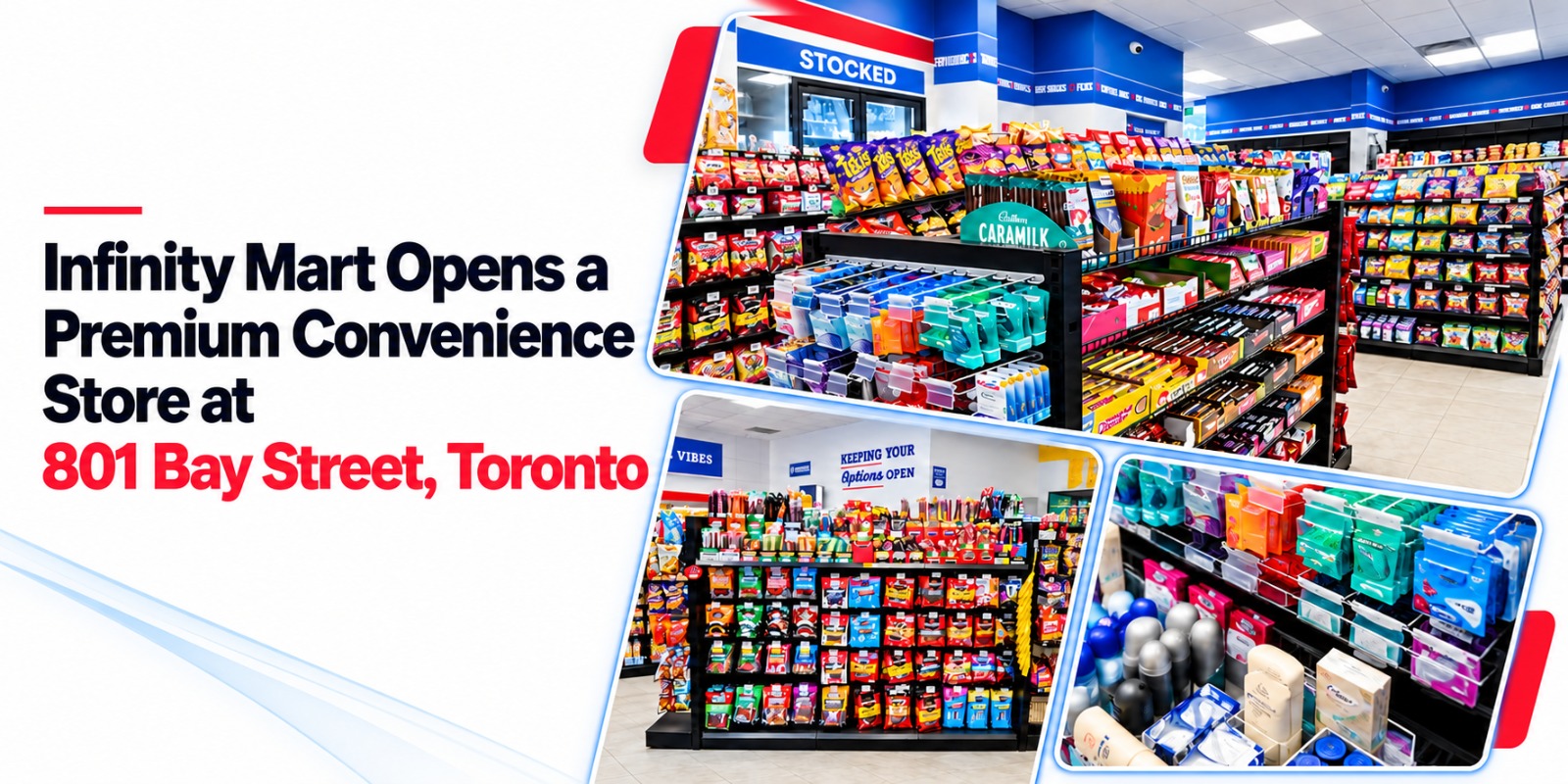
Infinity Mart Opens Premium Convenience Store at Bay Street
September 29, 2026
How Much Money Do You Need to Open a Convenience Store?
September 26, 2026
Infinity Mart Opens New Convenience Store on Portage Ave, Winnipeg
September 8, 2026
Infinity Mart Opens New Convenience Store Near Fort York, Toronto
September 2, 2026