Affordable Convenience Store Franchise Canada: What $200K Gets You in 2026
Top Low Investment Franchise With High Return In 2026
A low investment franchise with high return in 2026 is one that combines a startup cost under $100,000 with strong, repeat revenue. Think convenience stores, vape retail, home services, and mobile business models. These franchises win because they keep overhead low while tapping into demand that doesn’t slow down, no matter what the economy is doing. If you’ve ever thought about owning a business but felt priced out by six- and seven-figure startup costs, this is the year to look again. Franchising has quietly become one of the most realistic ways to become your own boss, even if you’re starting with a modest budget. This guide breaks down what “low investment, high return” really means, which categories are winning in 2026, and how a real Canadian brand, Infinity Mart, fits into that picture. No hype, no guaranteed-riches promises. Just the numbers and the questions you should actually be asking.Quick Answer: Best Low Investment Franchises With High ROI in 2026
Short on time? Here’s the fast version.- Convenience & vape retail:, $39,000–$100,000, daily foot traffic, low staffing needs
- Gas station combo retail :$225,000–$850,000+ , higher entry, but a second fuel-based revenue stream
- Home & mobile services (cleaning, tutoring, pet care) : $10,000–$50,000 , little to no storefront cost
- B2B & consulting-style franchises: $20,000–$60,000 ,high margins, minimal inventory
- Micro-footprint food concepts: $50,000–$150,000, smaller kitchens, lower rent, faster breakeven
What Does “Low Investment, High Return” Actually Mean?
These two phrases get thrown around a lot in franchise marketing. Here’s what they actually mean once you’re looking at real numbers.How Franchise Cost Is Actually Calculated
The franchise fee is just one line item. Your real total investment usually includes:- Franchise fee: the upfront licensing cost
- Buildout or setup costs: renovations, signage, equipment
- Working capital: cash to cover the first 3–6 months before the business is self-sustaining
- Ongoing royalties: typically 5%–12% of revenue, paid to the franchisor
What Counts as “High ROI” in Franchising
ROI isn’t just “will I make money?” It’s about how fast and how efficiently.- Payback period: how many months or years until you earn back your investment
- Net margin: how much profit you keep after all expenses
- Break-even timeline: when monthly revenue finally covers monthly costs
Why 2026 Is a Turning Point for Franchise Investors
A few shifts are making this a genuinely good year to buy into a franchise, rather than just a good year for franchisors to sell one.- Traditional retail buildouts keep getting more expensive, pushing new investors toward leaner, asset-light formats
- Recurring-purchase categories (convenience, vape, essentials) hold up better in uncertain economies than one-time-purchase businesses
- Home services and B2B franchises are growing because they skip the biggest cost of all: a physical storefront
- First-time entrepreneurs and career-changers are actively looking for entry points under $100,000, and franchisors are responding with more flexible formats
Top Low Investment Franchise Categories With High Return in 2026
Here’s where the “low investment, high return” idea actually plays out across real categories.1. Convenience Store & Retail Franchises
Convenience stores work because people don’t stop needing snacks, drinks, lottery tickets, and everyday essentials, regardless of the economy.- Typical investment: $100,000–$300,000 for a standalone location
- Why the margins work: consistent daily foot traffic, low staffing ratios, high basket frequency
- Best for: investors who want a physical business with predictable, repeat customers
2. Vape & Specialty Retail Franchises
Specialty retail categories, especially vape, have grown fast because they combine low buildout costs with high customer loyalty.- Typical investment: $39,000–$50,000, plus inventory
- Why it works: small footprint, focused product range, repeat customers
- Best for: first-time franchise buyers who want the lowest realistic entry point into retail ownership
3. Gas Station Combo & Fuel-Anchored Retail
This is the higher-investment tier, but it comes with a higher revenue ceiling.- Typical investment: $225,000–$850,000+, depending on fuel brand and site volume
- Why it works: fuel sales plus in-store retail creates two income streams from one location
- Best for: investors ready to scale beyond a single standalone store
4. Home & Mobile Service Franchises
Cleaning, tutoring, senior care, and pet services keep growing because they don’t require a storefront at all.- Typical investment: $10,000–$50,000
- Why it works: low overhead, flexible scheduling, service delivered at the customer’s location
- Best for: people who want to start small and reinvest profits into growth
5. B2B & Consulting-Style Franchises
These are some of the most overlooked high-margin opportunities out there.- Typical investment: $20,000–$60,000
- Why it works: little to no inventory, expertise-driven services like bookkeeping, tax prep, or business consulting
- Best for: career-changers with existing professional skills to leverage
6. Food-on-the-Go & Micro-Footprint Food Concepts
Instead of a full sit-down restaurant, these brands operate out of small kiosks, trailers, or shared retail space.- Typical investment: $50,000–$150,000
- Why it works: lower rent, smaller teams, faster time to open
- Best for: food entrepreneurs who want in without a $500,000+ restaurant buildout
Infinity Mart: A Real Example of a Scalable, Low Investment Franchise in Canada
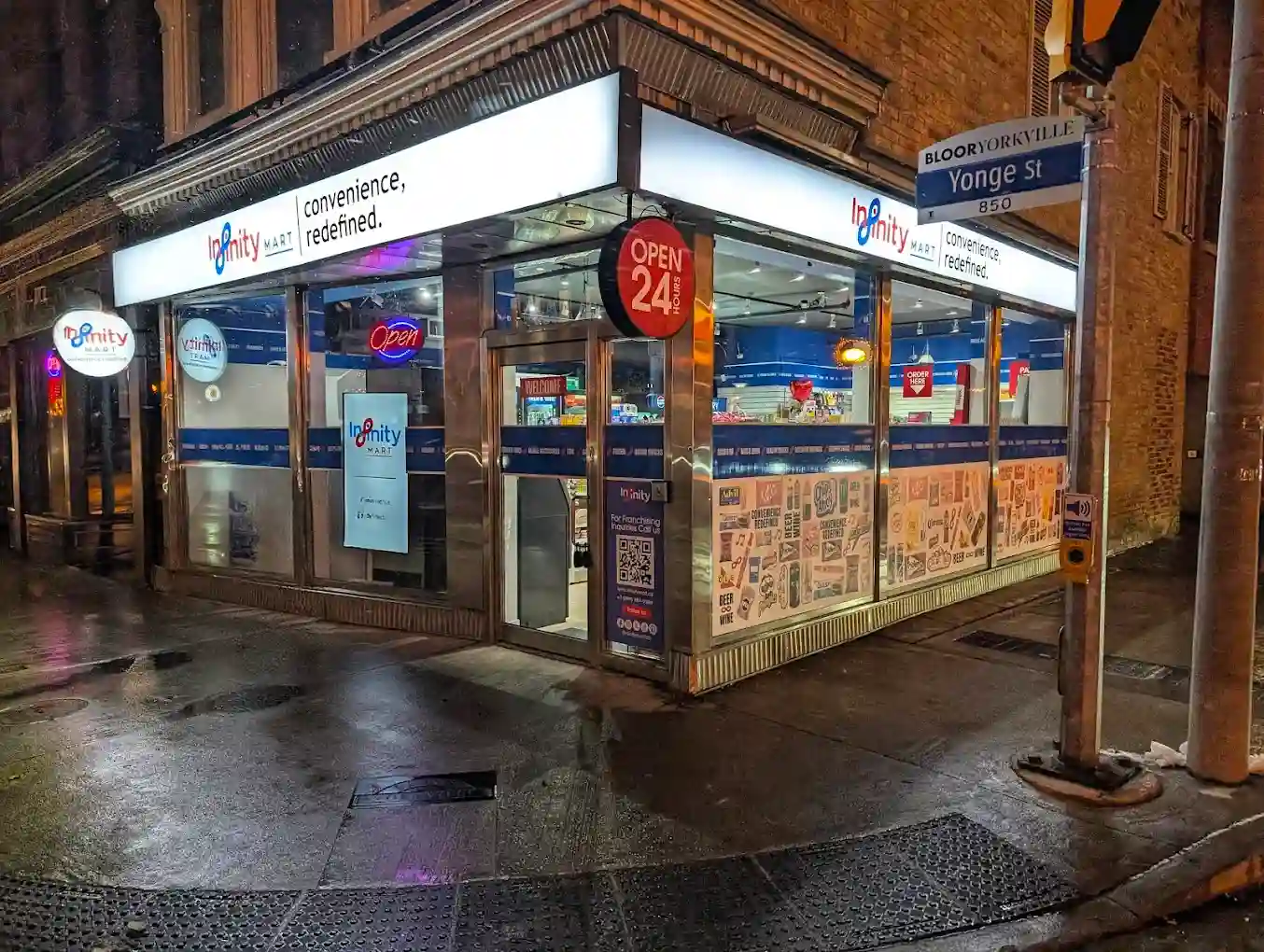
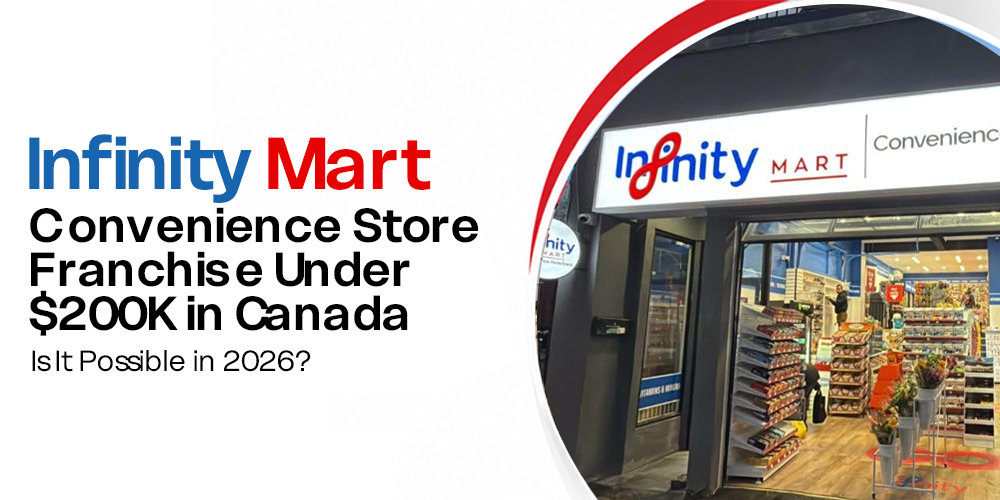
Numbers are easier to trust when they’re tied to an actual brand. Infinity Mart is a next-generation convenience retail concept operating 11+ locations across Ontario, with a five-year goal of reaching 100+ locations across Canada. It’s a useful case study because it offers three distinct entry points at three different price tiers.Infinity Mart Standalone Store, Starting at $100,000
This is the core convenience store format: clean layouts, a curated product mix, and a brand customers already recognize when they see it.- Entry point starting around $100,000
- Backed by structured site-selection support
- Designed for owners who want a full retail footprint
Infinity Mart Gas Station Combo, $225,000 to $850,000+
For investors ready to scale, this format pairs an Infinity Mart with an established fuel brand.- Combo locations range from $225,000 to $850,000+, depending on fuel brand and volume
- Optional carwash add-on available at many locations
- Two revenue streams (fuel + retail) from a single property
Infinity Vape: Starting at $39,000 (Lowest Entry Point)
This is the lowest-cost way into the Infinity brand family.- Starts around $39,000, with most locations landing under $50,000 plus inventory
- Lower overhead than a full convenience store
- Same site-selection and operational backing as the larger formats
How to Evaluate ROI Before Buying Any Franchise
Before signing anything, run every franchise opportunity through the same checklist, regardless of how good the pitch sounds.- What’s the real total investment? Ask for the full range, not just the franchise fee.
- What’s the average payback period for current franchisees in this system?
- What ongoing fees apply to royalties, marketing contributions, technology fees?
- Is the territory exclusive, or could another franchisee open two blocks away next year?
- What training and post-launch support is actually provided, and for how long?
Common Mistakes That Kill Franchise ROI
Even a good franchise can turn into a bad investment if these mistakes happen early.- Underestimating working capital. Running out of cash in month four is more common than running out of customers.
- Skipping local market research. A great concept in the wrong location still fails.
- Choosing an oversaturated category just because it’s trendy.
- Ignoring the franchisor’s track record. Ask how many locations have closed, not just how many have opened.
- Treating the franchise fee as the full cost. It rarely is.
Low Investment vs. High Investment Franchises: Which Wins in 2026?
There’s no universal winner here, it depends on what you’re optimizing for.| Factor | Low Investment Franchise | High Investment Franchise |
| Startup cost | $10,000–$100,000 | $225,000–$1M+ |
| Risk level | Lower | Higher |
| Payback speed | Often faster | Often slower |
| Earnings ceiling | Moderate | Higher long-term |
| Best for | First-time owners, career-changers | Experienced investors ready to scale |
FAQ:
What is the best low investment franchise with high return in 2026?
There’s no single “best” one. Convenience and specialty retail (like vape franchises starting around $39,000) offer some of the fastest paths to profit due to low overhead and repeat customers.How much money do I need to start a franchise in Canada?
It varies widely. Home-based service franchises can start under $20,000, while retail formats typically start around $39,000–$100,000, and combo or fuel-anchored locations can exceed $500,000.What franchise has the fastest payback period?
Low-overhead service and specialty retail franchises generally have the fastest payback, often 12–24 months, because they require less staff and lower fixed costs.Is a convenience store franchise profitable in 2026?
Yes, especially formats with a curated product mix and repeat foot traffic. Profitability depends heavily on location, product selection, and support from the franchisor.How much does an Infinity Mart franchise cost?
Standalone stores start around $100,000. Gas station combo locations range from $225,000 to $850,000+, depending on the fuel brand and site volume.What is the lowest-cost franchise offered by Infinity Mart?
Infinity Vape, starting around $39,000, with most locations landing under $50,000 plus inventory.Do franchises make passive income, or do I need to work in the store?
Most franchises require active involvement, especially in the first year. Some owners hire managers after establishing operations, but “fully passive” franchises are rare, be cautious of anyone who promises otherwise.Final Thoughts:
Three things matter more than anything else when picking a franchise in 2026:- The real total cost, not just the marketing headline number
- Genuine demand for the category in your target location
- The level of franchisor support, especially after opening day
Table of Contents
Related post
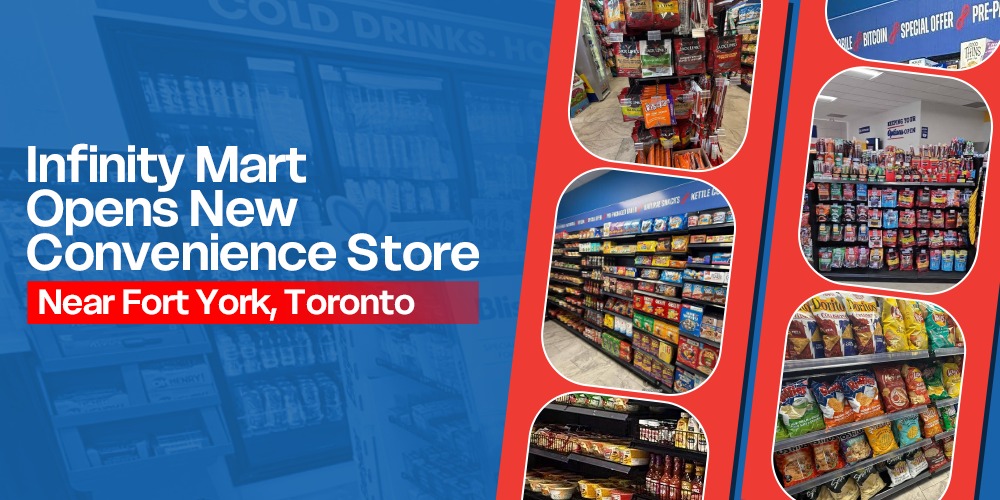
Infinity Mart Opens New Convenience Store Near Fort York, Toronto
September 2, 2026
Best Convenience Stores Open 24/7 Near Me in Toronto
August 18, 2026
Is a Convenience Store Franchise Worth It in Canada in 2026?
August 12, 2026