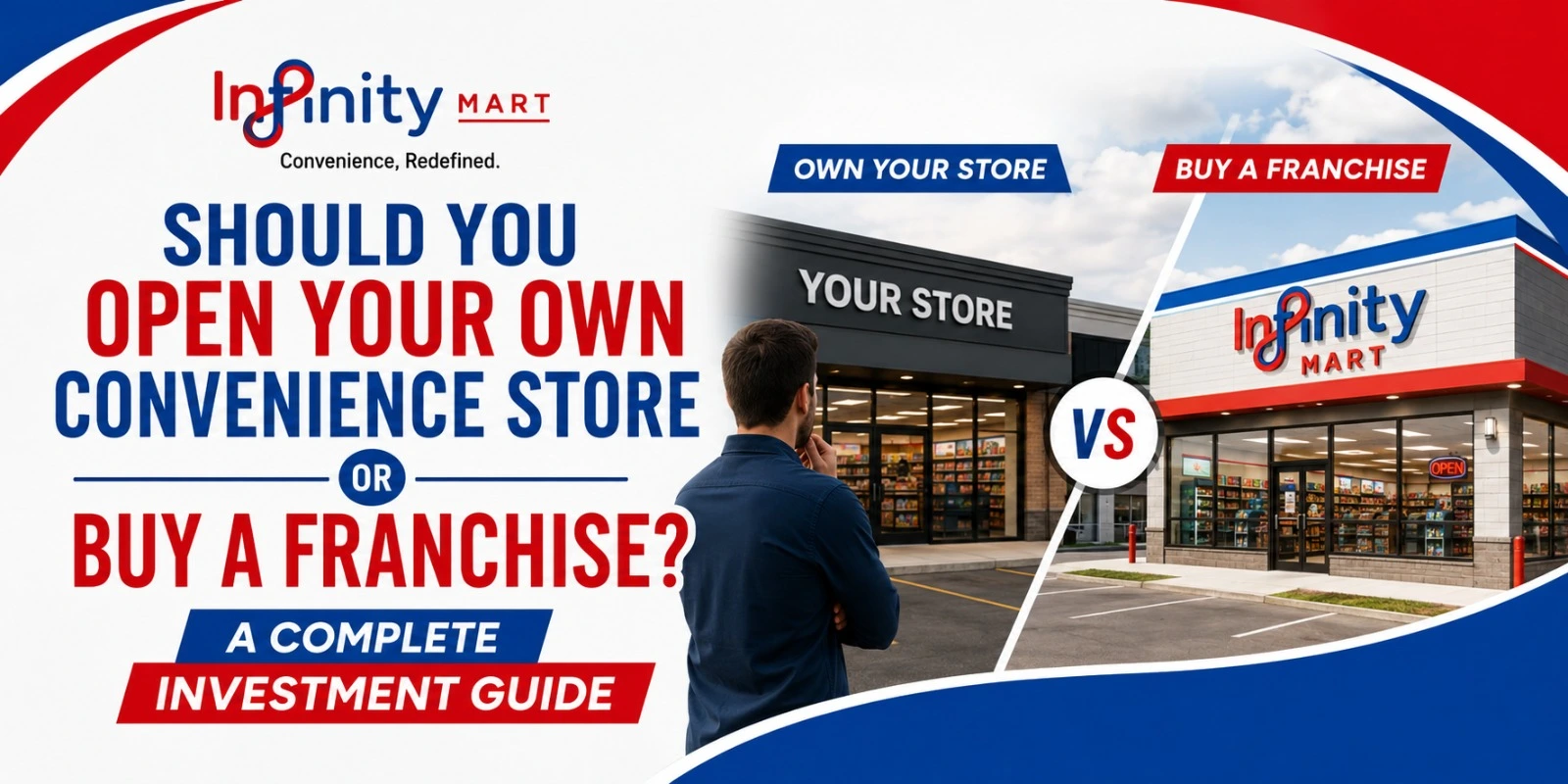
Should You Open Your Own Convenience Store or Buy a Franchise? A Complete Investment Guide
Ever walked into a convenience store that actually felt good to be in? Clean shelves, a smart layout, products you actually want, not just milk and lottery tickets shoved under flickering lights.
That’s the gap Infinity Mart is stepping into.
If you’ve been thinking about owning a business but don’t want to build everything from zero, a convenience store franchise is one of the most practical ways in. And Infinity Mart franchise opportunities are getting attention across Canada right now, for good reason.
Estimated total investment: $185,000 – $485,500 CAD
A few things worth flagging:
Quick answer: To start an Infinity Mart franchise, you’ll need an investment ranging from $185,000 to $485,500 CAD (or as little as $39,000 for the vape format), and you’ll go through a structured 9-step process, from your first application to your grand opening day.
This guide walks you through exactly how that process works, what it costs, and what to expect at each stage.
What Is Infinity Mart?
Infinity Mart is a Canadian convenience store brand built around one idea: convenience retail doesn’t have to feel outdated.- Currently operates 11+ locations across Ontario
- Aiming for 100+ locations across Canada within five years
- Focused on modern store design, curated products, and a brand people actually recognize
Why 2026 Is a Smart Time to Look at Convenience Store Franchises
Timing matters in franchising. Get in too early and the brand isn’t proven yet. Get in too late and every good territory is taken. Here’s why 2026 sits in a good window:- Canada’s franchise industry is projected to reach $133.3 billion in 2026
- Convenience retail remains one of the most resilient sectors, even during economic uncertainty
- Rising cost-of-living pressure is pushing consumers toward everyday essentials, exactly what convenience stores sell
- Territories are still available across multiple provinces, meaning less competition for prime spots
Infinity Mart Franchise Formats: Which One Fits You?
This is where Infinity Mart differs from a lot of franchise brands. You’re not locked into one investment size.1. Standalone Convenience Store
- Investment starts around $185,000 CAD
- Best for first-time franchise owners wanting a full-service retail store
- Flexible location types (plazas, transit hubs, residential areas)
2. Gas Station Combo Format
- Investment ranges from $225,000 to $850,000+
- Paired with recognized fuel brands like Esso, Mobil, Ultramar, or Centex
- Optional carwash add-on for extra revenue
- Best for investors seeking higher per-location revenue potential
3. Infinity Vape Franchise
- Investment starts around $39,000, up to roughly $50,000 plus inventory
- The lowest-cost entry point into the Infinity Mart brand
- Best for first-time entrepreneurs or those testing franchise ownership before scaling up
| Format | Investment Range | Best For |
| Standalone Store | $185,000+ | First-time franchise owners |
| Gas Station Combo | $225,000 – $850,000+ | Investors wanting higher revenue potential |
| Infinity Vape | $39,000 – $50,000+ | Lower-budget entry into the brand |
Infinity Mart Franchise Cost Breakdown (2026)
Franchise costs always come with a lot of moving pieces, so here’s the full picture in one place. Our full franchise cost guide breaks down each of these categories in more depth.| Category | Estimated Cost (CAD) |
| Franchise Fee | $30,000 (one-time) |
| Leasehold Improvements | $50,000 – $150,000 |
| Fixtures, Equipment & POS System | $50,000 – $150,000 |
| Initial Inventory | $35,000 – $100,000 |
| Signage and Branding | $5,000 – $10,000 |
| Professional Fees (Legal, Permits) | $2,500 – $5,000 |
| Training & Onboarding | $2,500 |
| Working Capital (3–6 months) | $15,000 – $35,000 |
- Applicable taxes are not included in the above numbers
- POS and security system costs may apply separately
- Final costs depend on the specific site you’re approved for
How to Start an Infinity Mart Franchise: The 9-Step Process
This is the part most people actually want to know: what does the process look like, start to finish?Step 1: Submit Your Interest
You complete an online application or reach out directly. The franchise team reviews your background, location preferences, and available investment capacity.Step 2: Introductory Call & Discovery Meeting
A franchise development representative walks you through the business model, investment breakdown, and available territories. If there’s a fit on both sides, you move to a formal discovery meeting.Step 3: Due Diligence & Documentation
You receive the Franchise Disclosure Document (FDD). This covers financials, obligations, and your rights as a franchisee. It’s strongly recommended you review this with a franchise lawyer or financial advisor before signing anything.Step 4: Site Selection & Approval
Infinity Mart’s real estate team works with you to evaluate potential locations based on foot traffic, demographics, and lease terms. Every site must be formally approved, you can’t just pick any spot.Step 5: Franchise Agreement Signing
Once your site is approved, you sign the Franchise Agreement and pay the initial franchise fee to officially secure your territory.Step 6: Training & Onboarding
You go through a hands-on training program covering operations, inventory systems, vendor relationships, marketing, and compliance.Step 7: Store Buildout & Setup
The team supports store design, equipment sourcing, POS setup, and initial inventory ordering, negotiating on your behalf to help control startup costs.Step 8: Grand Opening Support
On launch day, the operations team is physically on-site to support your first day and help ensure a smooth start.Step 9: Ongoing Operations & Growth
Support doesn’t stop at launch. You continue receiving operational guidance as your store settles into regular business.Site & Location Requirements
Location can make or break a convenience store, so Infinity Mart is selective about where new franchises go. Preferred location types include:- Transit and commuter hubs: subway stations, GO Transit terminals, bus depots
- Office towers and business districts: lobbies and concourse-level spaces
- Residential plazas and mixed-use developments: strong repeat local traffic
- Gas station partnerships: co-branded with fuel providers
- College and university campuses: compact, student-focused layouts
- Malls, airports, and tourist zones: select markets only, higher rent but higher exposure
- Size: 300, 3,000 sq. ft.
- Frontage: minimum 12–15 ft.
- Power: 100–200 AMP electrical
- Visibility: strong pedestrian or vehicle exposure
- Parking: preferred, not always mandatory
Training & Ongoing Support
A lot of franchise brands promise “training” but deliver a short onboarding video and a manual. Infinity Mart’s approach is more hands-on. Training program highlights:- Runs 1,2 weeks, conducted in a real, live store environment
- Covers store setup, daily operations, and product rotation
- Includes POS system training and cash handling procedures
- Covers loss prevention, health and safety, and local compliance
- Focuses on customer service and merchandising standards
- Ongoing coaching from the operations team
- Refresher sessions as needed
- On-site visits to check performance and troubleshoot issues
- Have $39,000 to $485,000+ available depending on the format you’re considering
- Want a proven business system rather than building one from scratch
- Are comfortable being hands-on, especially in the early months
- Value brand support over full creative independence
- You want complete control over branding, pricing, and product selection
- You’re not comfortable with royalty payments and brand compliance standards
- You’re looking for a fully passive, hands-off investment.
Pros and Cons of Investing in an Infinity Mart Franchise
Pros:- Multiple entry points, from $39,000 vape stores to full combo locations
- National vendor pricing and supply relationships
- Structured, transparent 9-step onboarding process
- Real, in-store training rather than generic online modules
- Support continues well past opening day
- Franchise fee and ongoing costs apply, as with any franchise model
- Site locations must be franchisor-approved, limiting full flexibility
- Success still depends heavily on active, hands-on management
How Long Until You’re Profitable?
Most convenience store franchises reach operational break-even somewhere between 12 and 24 months, depending on location, foot traffic, and product mix. A few things tend to speed this up:- High-margin categories like lottery, tobacco, alcohol, and prepared food
- Strong site selection with consistent daily foot traffic
- Lower overhead structures, which is part of Infinity Mart’s core model
FQS;
What is a convenience store franchise and how does it work?
It’s a business model where you license a proven brand, systems, and supply chain from a franchisor in exchange for a fee and ongoing royalties. You operate the store, but within the franchisor’s established standards.How much does it cost to open an Infinity Mart franchise?
Total investment typically ranges from $185,000 to $485,500 CAD, depending on the format and site. The vape format starts as low as $39,000.Is 2026 a good time to invest in a convenience store franchise?
Yes. Canada’s franchise sector is projected to reach $133.3 billion in 2026, and convenience retail remains one of the more resilient categories as consumers lean into everyday essentials.Can I own multiple Infinity Mart locations?
Multi-unit ownership is generally possible, subject to your first location being stabilized and meeting performance and financial requirements.What’s included in the franchise fee?
The one-time $30,000 CAD fee secures your territory and gives you access to the brand, training, systems, and ongoing support infrastructure.What does training involve?
A 1,2 week, hands-on program in a live store setting, covering operations, POS systems, compliance, and customer service, plus ongoing coaching after you open.What is a Franchise Disclosure Document (FDD)?
It’s a legal document outlining financials, obligations, and your rights as a franchisee. It’s provided during the due diligence stage, and reviewing it with a lawyer before signing is strongly recommended.Final Thoughts
Starting an Infinity Mart franchise comes down to three things: knowing your investment range, understanding the 9-step process, and picking the format that actually fits your goals, whether that’s a full standalone store, a gas station combo, or a lower-cost vape location. The process is structured, the training is hands-on, and the support doesn’t disappear after opening day, which is exactly what you want from a franchise partner. If you’re ready to move forward, the next step is simple: submit your interest and start the conversation with the Infinity Mart franchise team.Table of Contents
Related post
Infinity Vape Now Open at 801 Bay Street, Toronto
October 15, 2026
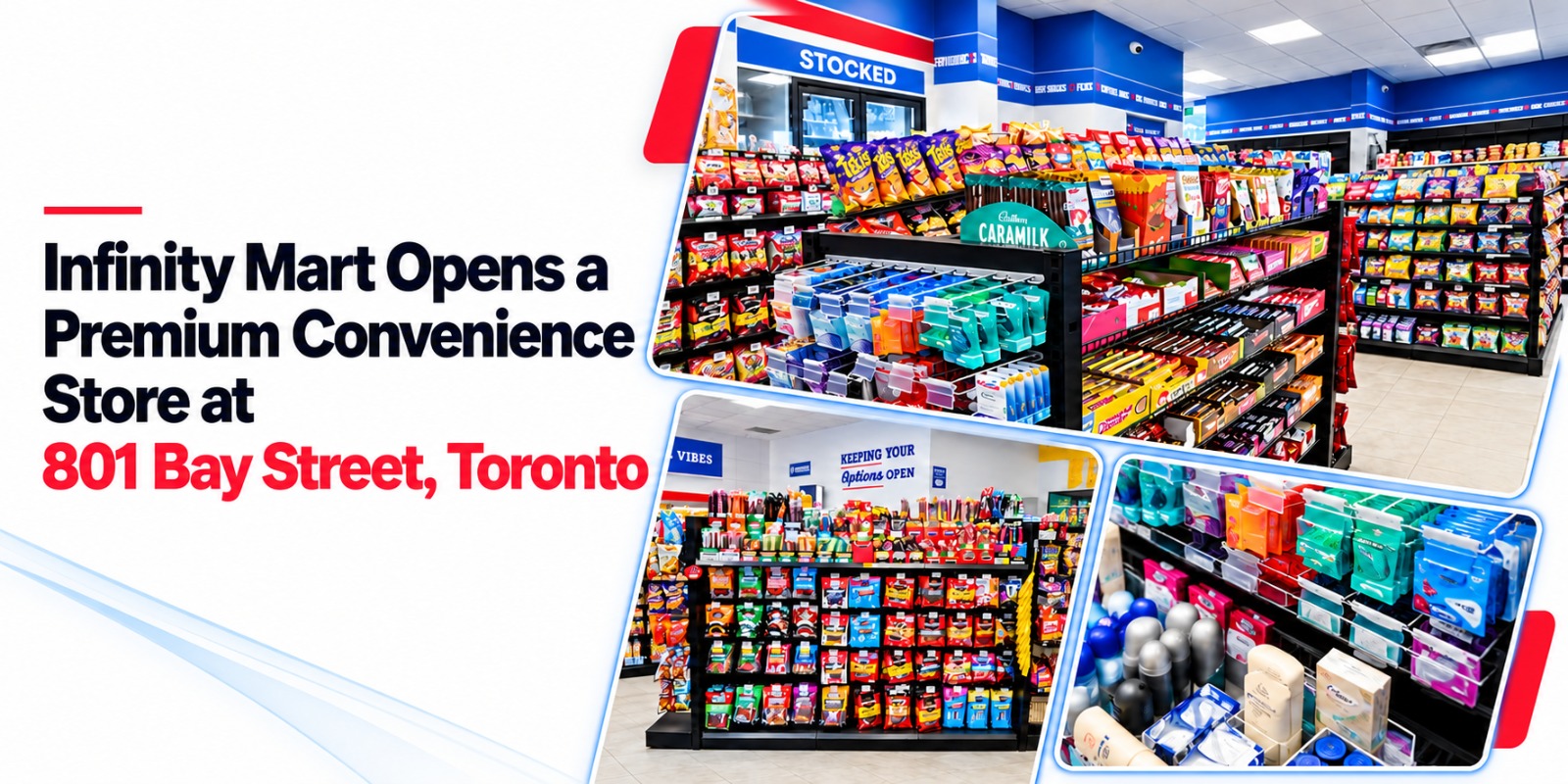
Infinity Mart Opens Premium Convenience Store at Bay Street
September 29, 2026
How Much Money Do You Need to Open a Convenience Store?
September 26, 2026