How Much Money Do You Need to Open a Convenience Store?
If you’ve ever stood in line at your local corner store and thought, “I could run a place like this,” you’re not alone. Convenience stores are one of the most approachable small businesses out there. Everyone understands the model, the hours are predictable, and people need what you’re selling every single day.
But before you get too far into the daydream, there’s one question that decides everything else: how much money do you actually need?
Quick answer: Opening a convenience store typically costs anywhere from $50,000 to $600,000+, depending on whether you go independent or join a franchise. A convenience store franchise in Canada usually lands between $185,000 and $485,500 CAD for a standalone location, or $225,000 to $850,000+ for a premium gas station combo site.
That’s a wide range. Let’s break down exactly why, and what you’d actually be paying for at each price point.
What Determines the Cost to Open a Convenience Store?
No two convenience stores cost the same to open. A handful of factors swing the price up or down, sometimes by hundreds of thousands of dollars.
Here’s what actually moves the number:
- Location. A storefront in downtown Toronto costs a lot more than one in a small town. Rent, real estate, and construction prices all shift by city and even by neighbourhood.
- Store format. A standalone convenience store, a gas station combo, and a vape-focused shop all have very different price tags.
- Independent vs. franchise. Going independent skips the franchise fee, but you lose brand recognition, vendor pricing, and built-in training.
- Store size. Most convenience stores run between 300 and 3,000 square feet. Bigger footprints mean higher buildout and inventory costs.
- Equipment condition. Taking over an existing site with usable coolers, shelving, and a POS system is cheaper than building from scratch.
- Initial inventory. Fully stocking shelves for opening day isn’t cheap, and it’s easy to underestimate.
Once you understand these variables, the “it depends” answer starts to make a lot more sense.
Independent Store vs. Convenience Store Franchise: Cost Comparison
This is usually the first fork in the road for anyone exploring this business. Do you build something from the ground up, or buy into a system that already works? Our guide on whether to open your own convenience store or buy a franchise goes deeper on that decision.
Path | Typical Startup Cost | Pros | Trade-offs |
Independent store | $50,000 – $600,000 | Full creative and operational control | No brand recognition, no vendor pricing, no built-in training |
Convenience store franchise | $185,000 – $850,000+ | Proven system, national vendor deals, site selection support | Franchise fee plus ongoing royalties |
Going independent can technically cost less upfront. But you’re also building your vendor relationships, your training program, and your brand awareness from zero, usually while learning retail operations on the fly.
A convenience store franchise costs more to get into, but you’re paying for a head start: a tested layout, negotiated supplier pricing, and a team that’s already solved the problems you haven’t hit yet. If you want the full picture before deciding, read the pros and cons of owning a convenience store in Canada.
Convenience Store Franchise Cost Breakdown (Real Numbers)
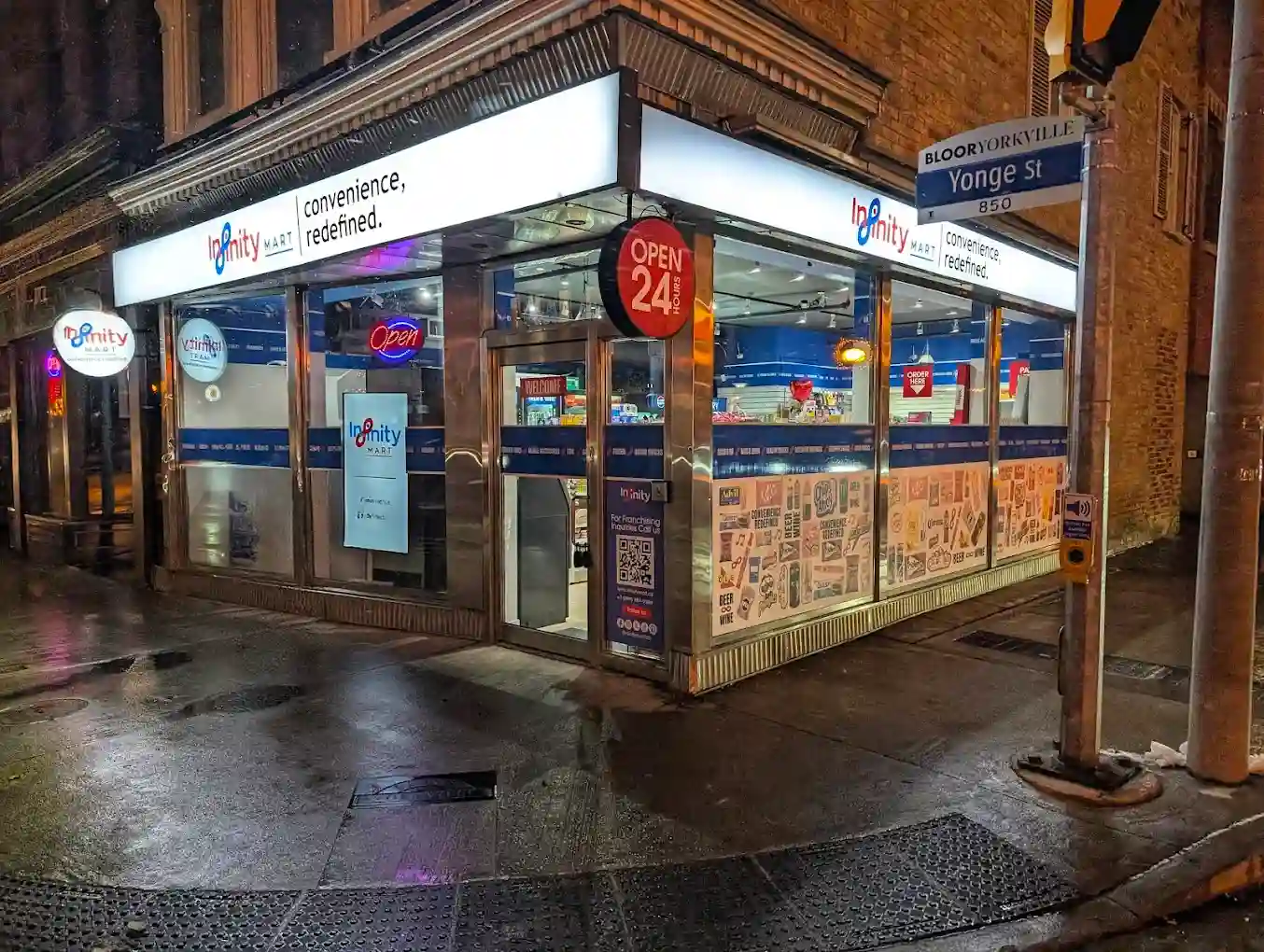
Instead of guessing, let’s look at what a real Canadian convenience store franchise budget looks like. Here’s the published startup cost breakdown for Infinity Mart, a growing convenience retail brand operating across Ontario, Manitoba, and Quebec.
Category | Estimated Cost (CAD) |
Franchise Fee | $30,000 (one-time) |
Leasehold Improvements | $50,000 – $150,000 |
Fixtures, Equipment & POS System | $50,000 – $150,000 |
Initial Inventory | $35,000 – $100,000 |
Signage and Branding | $5,000 – $10,000 |
Professional Fees (Legal, Permits) | $2,500 – $5,000 |
Training & Onboarding | $2,500 |
Working Capital (3–6 months) | $15,000 – $35,000 |
Estimated Total Investment | $185,000 – $485,500 CAD |
A few things worth flagging:
- Applicable taxes are not included in this range.
- POS and security system costs are also separate line items.
- Final numbers depend on the specific site: a busy transit location and a quiet residential plaza won’t cost the same to build out.
For a category-by-category explanation, see our full franchise cost guide.
That one-time $30,000 franchise fee often raises eyebrows, so it’s worth explaining what it actually buys: your territory, access to the brand, the training program, and ongoing operational support. It’s not a fee for nothing, it’s the entry ticket to everything else in the table above.
Premium Convenience Store Canada: The Gas Station Combo Model
If a standalone store is the entry-level option, the gas station combo is the premium tier.
This format pairs a convenience store with a recognized fuel brand like Esso, Mobil, Ultramar, or Centex. You’re not just selling snacks and drinks to walk-in customers anymore; you’re capturing fuel sales from every car that pulls in.
What it costs: $225,000 to $850,000+, depending on the fuel brand and expected volume.
Why it costs more:
- You’re adding a second, high-volume revenue stream on top of retail sales
- Fuel-anchored sites tend to sit in higher-traffic locations
- Many combo locations include an optional carwash add-on, which increases both cost and customer stickiness
This format tends to suit investors who are less focused on the lowest possible entry price and more focused on maximizing revenue per location. If you’re comparing options, think of it less as “the expensive version” and more as “the version built for volume.”
Convenience Stores Franchise in Canada: Why the Market Is Worth a Look
Timing matters in any investment decision, so it’s fair to ask: is this actually a good market to enter right now? We cover this in more detail in is a convenience store franchise worth it in Canada in 2026.
A few reasons the answer leans yes:
- Canada’s franchise industry is projected to reach $133.3 billion in 2026, and convenience retail is one of its most resilient categories.
- Essentials spending holds up even when household budgets tighten. When consumers cut back, they’re cutting discretionary purchases first, not the milk, lottery tickets, or coffee run.
- Expansion room still exists. Established brands are actively growing into British Columbia, Nova Scotia, Alberta, Prince Edward Island, and Newfoundland & Labrador, which means less local competition for early movers in those provinces.
None of this guarantees success no market stat does. But it does mean you’re not stepping into a shrinking category.
Convenience Stores Franchise in Ontario & Toronto: What Changes Locally
If you’re specifically looking at Ontario, or Toronto in particular, your budget planning needs a local lens. You can browse current convenience store franchises for sale in Ontario, including Toronto locations, to see real asking prices.
Why Ontario, and Toronto specifically, attract franchise interest:
- High population density means more potential customers within walking distance
- Strong transit ridership creates consistent daily foot traffic
- A dense mix of office towers, residential buildings, and campuses supports multiple store formats
Site types that tend to perform well in these markets:
- Transit and commuter hubs (subway stations, GO Transit terminals, bus depots)
- Office towers and business districts, especially for coffee and grab-and-go lunch traffic
- Residential plazas and mixed-use developments with strong repeat, neighbourhood traffic
- College and university campuses
One practical note: rent in Toronto runs higher than in smaller Ontario markets, so if you’re budgeting for a location in the city, plan toward the upper end of the $185,000–$485,500 range rather than the lower end.
A Lower-Cost Entry Point: Vape Franchise Format
Not everyone has $185,000+ sitting in a bank account, and that’s exactly why specialty formats exist.
A vape franchise is a smaller , lower-overhead alternative to a full convenience store, while still riding on the same brand support and site selection process.
Typical cost: starting around $39,000, with most locations landing up to $50,000, plus inventory.
This format tends to appeal to:
- First-time franchisees who want to start smaller and scale later
- Investors interested in a focused product category rather than full-range retail
- Anyone priced out of a standalone store but not out of business ownership altogether
Hidden and Ongoing Costs to Budget For
The upfront investment table gets most of the attention, but it’s not the whole financial picture. Here’s what tends to catch new franchisees off guard:
- Royalties. Most franchise systems charge an ongoing royalty on top of the initial fee factor this into your monthly projections, not just your startup budget.
- Taxes. As noted earlier, applicable taxes sit outside the standard cost estimate.
- POS and security systems. These are commonly listed as additional costs, not bundled into the base range.
- Working capital buffer. The 3–6 month cushion in the cost table exists for a reason. Don’t skip it or shrink it to save money upfront.
- Staffing before break-even. You’ll likely be paying wages before the store is consistently profitable, so build that into your runway.
Budgeting for these now avoids a much more stressful conversation with your accountant later.
How Long Until a Convenience Store Franchise Becomes Profitable?
Here’s the honest answer: some locations reach break-even within 12 to 24 months, though this depends heavily on your investment size, location, operating costs, and day-to-day performance. For a closer look at the numbers, see how much profit a convenience store owner makes per month.
A few things tend to speed up profitability:
- High-margin categories like lottery, tobacco, alcohol, and prepared food
- A genuinely low-overhead operating model
- National vendor pricing that protects your margins from day one
If a franchise brand can’t clearly explain how these factors work together, that’s worth asking about directly before you sign anything.
Step-by-Step: How to Open Your Convenience Store Franchise
Once you’ve settled on a budget, the actual process tends to follow a similar path across most established franchise systems:
- Submit your interest. Share your background, location preferences, and available investment capacity.
- Introductory call and discovery meeting. Walk through the business model, cost breakdown, and available territories.
- Due diligence and documentation. Review the Franchise Disclosure Document (FDD) ideally with a lawyer or financial advisor.
- Site selection and approval. Evaluate potential locations based on traffic, demographics, and lease terms.
- Franchise agreement signing. Pay the initial franchise fee and lock in your territory.
- Training and onboarding. Complete hands-on training covering operations, inventory, and compliance.
- Store buildout and setup. Finalize design, equipment, and initial inventory sourcing.
- Grand opening support. Get marketing and operational backing as you open your doors.
- Ongoing operations and growth. Continue receiving coaching and support after launch.
This isn’t a same-week process expect it to unfold over several months, especially the site selection and buildout stages.
FAQ:
What is the minimum investment for a convenience store franchise in Canada?
Standalone locations typically start around $185,000 CAD, while lower-cost specialty formats, like vape-focused stores, can start closer to $39,000–$50,000.
How much is the franchise fee versus the total startup cost?
The franchise fee is usually a smaller, fixed portion of your total investment for example, $30,000 out of a $185,000–$485,500 total range. The rest covers buildout, equipment, inventory, and working capital.
Is now a good time to invest in a convenience store franchise?
Market projections for 2026 suggest steady growth in Canada’s franchise sector, with convenience retail considered a resilient category due to consistent essentials spending.
Can I open a convenience store franchise in Toronto for under $200,000?
It’s possible, but you’ll likely land at the lower end of the range and may face higher competition for prime, high-traffic sites in the city. Our affordable convenience store franchise guide covers what’s realistic at this budget.
What’s the real difference between a standalone store and a gas station combo?
A standalone store sells convenience retail only. A gas station combo adds a fuel-anchored revenue stream and typically costs significantly more to open.
Do I actually need a Franchise Disclosure Document?
Yes. An FDD outlines financials, obligations, and your rights as a franchisee. Reviewing it with a franchise lawyer before signing is strongly recommended.
How long until a new location becomes profitable?
Many locations reach break-even within 12 to 24 months, depending on investment size, site performance, and category mix.
Final Word: Budgeting for Your Convenience Store
There’s no single number that answers “how much money do you need to open a convenience store.” What you’ve got instead is a range, shaped by the choices you make: independent or franchise, standalone or gas station combo, a major city or a quieter market.
For most Canadian franchise buyers, that range lands between $185,000 and $485,500 for a standalone location, up to $850,000+ for a premium combo site, and as low as $39,000 for a specialty format.
The real work is matching that range to your own budget, your goals, and the market you want to serve and going in with a clear-eyed view of both the upfront and ongoing costs.
Table of Contents
Related post
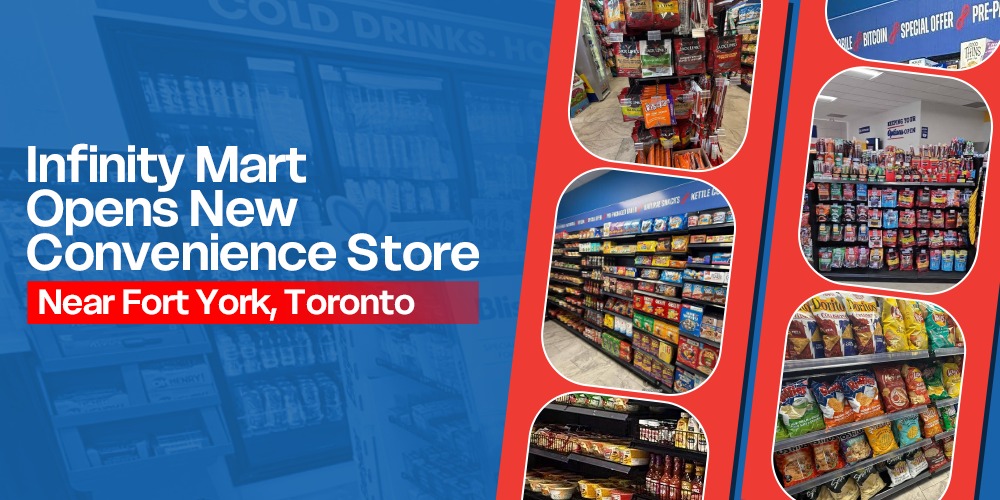
Infinity Mart Opens New Convenience Store Near Fort York, Toronto
September 2, 2026
Best Convenience Stores Open 24/7 Near Me in Toronto
August 18, 2026
Is a Convenience Store Franchise Worth It in Canada in 2026?
August 12, 2026