Best Franchises for Small Investors in Canada (2026 Guide)
Best Franchises for Small Investors in Canada (2026 Guide)
If you’ve got somewhere between $15,000 and $250,000 to invest and you’re wondering what kind of franchise actually makes sense in Canada right now, you’re not alone. This guide breaks down real investment ranges, the categories performing best for small investors in 2026, and how to pick a franchise that fits your budget instead of stretching past it.
You don’t need a million dollars to become a business owner. You need the right fit.
What Counts as a “Small Investor” Franchise in Canada?
In franchising, “small investor” doesn’t mean small opportunity. It just means you’re starting with limited capital, often as a first-time owner, sometimes running the business solo or with one or two staff members.
For this guide, we’re focusing on franchises in the roughly $15,000 to $250,000 CAD range. That covers everything from home-based service businesses to full retail storefronts.
Here’s the thing most people don’t realize: some of the most resilient, recurring-revenue businesses in Canada fall well within that range.
Why Small-Capital Franchises Are Booming Right Now
A few forces are pushing more Canadians toward lower-investment franchises in 2026:
- Economic caution. People want businesses that survive slow periods, not just boom years.
- Side-hustle culture. Many new franchisees start part-time before going full-time.
- Immigrant entrepreneurship. Franchising offers a proven system and built-in support, which matters a lot when you’re building a business in a new country.
- Essential-service demand. Convenience, food, cleaning, and specialty retail don’t go out of style.
Put simply: small investors are looking for businesses people need every single day. That’s exactly where this guide is headed.
How Much Money Do You Need to Start a Franchise in Canada?
This is usually the first question people ask, and the honest answer is: it depends on the category. But here’s a simple breakdown.
Under $50,000 Vape retail, mobile services, and home-based businesses. Lowest barrier to entry.
$50,000 to $150,000 Cleaning franchises, tutoring centres, and specialty retail formats.
$150,000 to $300,000+ Convenience stores, quick-service restaurants (smaller formats), and gas station combos.
Keep in mind that “total investment” almost never means just the franchise fee. It typically includes:
- Franchise fee
- Store buildout or renovation costs
- Opening inventory
- Working capital (cash to cover the first few months)
- Signage, equipment, and technology setup
If a franchise quotes you a number that only covers the fee, ask what’s not included before you sign anything. Our convenience store franchise cost guide walks through this exact line-item breakdown for the c-store category specifically.
What Makes a Franchise a Good Fit for a First-Time or Small Investor?
Not every low-cost franchise is actually a good deal. Before you commit, run it through this checklist:
- Manageable total investment: one that won’t wipe out your entire savings or emergency fund.
- Strong franchisor training and support: critical if you’ve never run a business before.
- Recurring or essential customer demand: think groceries, fuel, cleaning, and food, not fads.
- Realistic staffing needs: can you actually run this with the team size you can afford?
- A clear path to a second location: good franchises let you grow once you’ve proven the model works.
- Transparent Franchise Disclosure Document (FDD) : if a franchisor is cagey about sharing this, that’s a red flag.
If a franchise checks most of these boxes, it’s worth a serious look. For a longer version of this checklist specific to convenience store franchises, see our 7 questions to ask before buying a convenience store franchise in Canada.
Best Franchise Categories for Small Investors in Canada (2026)
Here’s where it gets practical. Below are the categories performing well for small investors this year, with real investment ranges.
Convenience Store Franchises
Convenience stores remain one of the most dependable categories for small investors, and for good reason: people need milk, snacks, drinks, and everyday essentials no matter what the economy is doing.
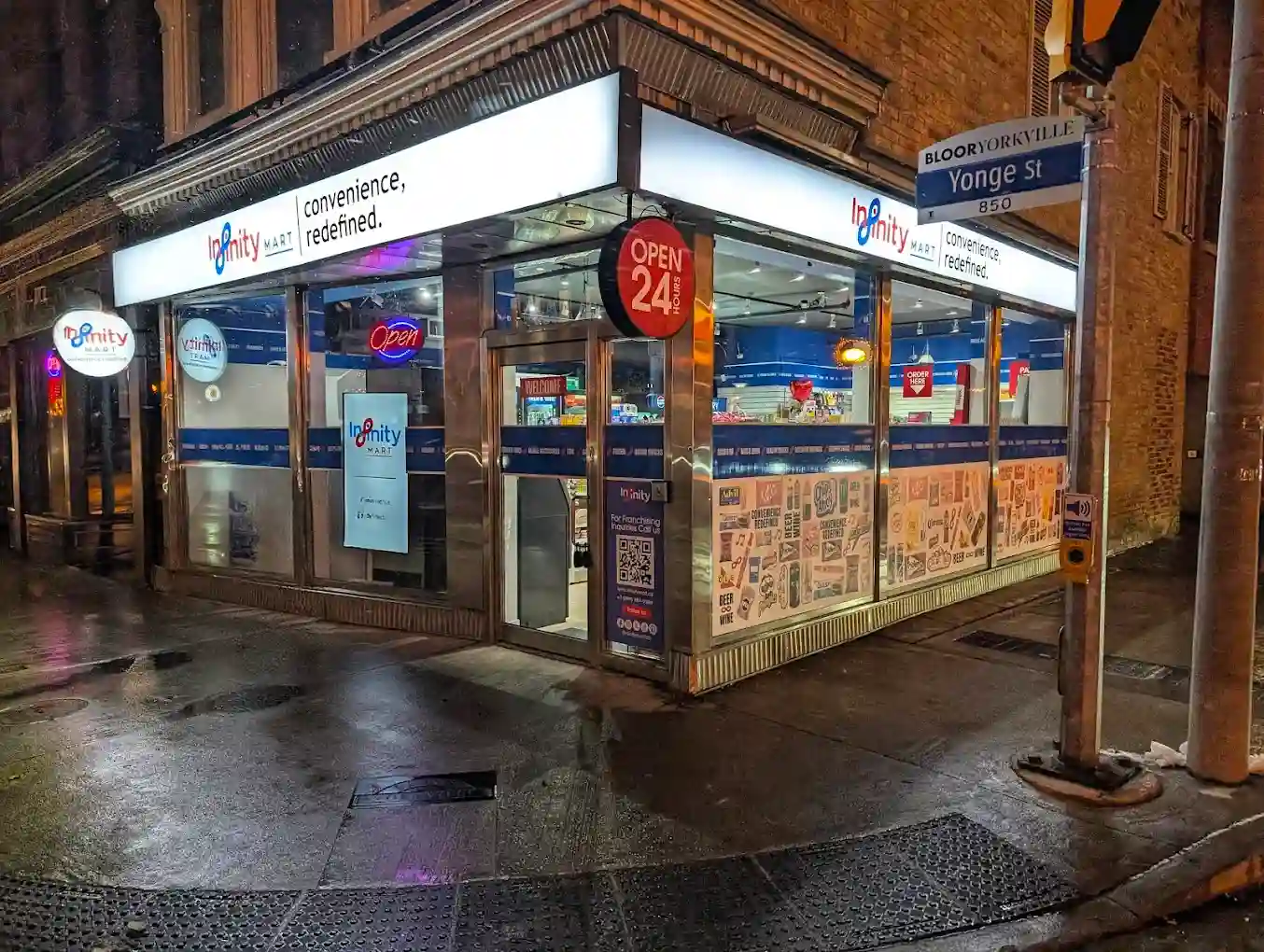
Infinity Mart is a strong example of how this category has evolved. Instead of the old-school c-store model, Infinity Mart operates as a next-generation convenience retailer with clean layouts, curated products, and a brand customers actually recognize.
Here’s what the investment looks like:
- Standalone convenience store: starting around $100,000, see our affordable convenience store franchise guide for the full cost breakdown.
- Gas station combo format: $225,000 to $850,000+, paired with major fuel brands like Esso, Mobil, Ultramar, or Centex
- Optional carwash add-ons available at combo locations for an extra revenue stream
Infinity Mart currently operates 11+ locations across Ontario, with a stated goal of 100+ locations across Canada within five years. For small investors who want retail ownership with room to scale, this is a category worth researching closely.
Good fit if: you want a physical storefront, daily foot traffic, and a business model with a proven site-selection process behind it.
Vape & Specialty Retail Franchises
This is one of the lowest-cost entry points in franchising right now. Infinity Vape, a specialty retail concept under the Infinity Mart brand, starts around $39,000, with most locations landing near $50,000 plus inventory.
That makes it one of the more accessible ways to own a specialty retail franchise while still getting franchisor support, an established brand, and a focused product category to manage.
Good fit if: you want retail ownership without the overhead of a full convenience store.
Cleaning & Home Services Franchises
Residential and commercial cleaning franchises typically range from $25,000 to $150,000, and many let you start small even solo before hiring a team.
- Low buildout costs (many are home-based or mobile)
- Recurring contracts create predictable income
- Scalable once you’ve built a client base
Good fit if: you’re comfortable with hands-on work early and want to grow at your own pace.
Food & Quick Service Restaurant (QSR) Franchises
It’s worth mentioning this category for contrast. Most established QSR brands require $500,000 to $2,000,000+, along with high net worth requirements. That puts them out of reach for most small investors which is exactly why the categories above tend to be more realistic starting points.
Fitness, Tutoring & Pet Care Franchises
These sit in the $70,000 to $300,000 range and are worth knowing about:
- Fitness franchises benefit from recurring membership revenue — a model investors like because it’s predictable.
- Tutoring franchises often need small footprints (1,000–2,000 sq ft) and modest staffing.
- Pet care franchises tap into repeat purchases from an industry that keeps growing.
Senior Care & Home Health Franchises
Canada’s aging population is fueling steady demand for in-home care and companion services. These franchises are typically service-based, with lower overhead than a retail storefront, making them an interesting option for investors who prefer a people-first business model.
Comparison Table: Franchise Investment Ranges at a Glance
Franchise Type | Starting Investment | Best For |
Vape retail (e.g., Infinity Vape) | ~$39,000–$50,000 | First-time, budget-conscious investors |
Cleaning & home services | ~$25,000–$150,000 | Solo operators, home-based start |
Convenience store (e.g., Infinity Mart) | ~$100,000+ | Investors wanting a full retail storefront |
Tutoring & education | ~$70,000–$300,000 | Community-focused owners |
Fitness | ~$100,000–$300,000 | Recurring membership revenue seekers |
Gas station combo | ~$225,000–$850,000+ | Investors ready to scale |
QSR (major chains) | $500,000–$2,000,000+ | Experienced, well-capitalized operators |
How to Choose the Right Franchise for Your Budget and Goals
Once you know your budget, narrow things down using these five factors.
- Match the franchise to your skills. Are you a natural salesperson, or do you prefer managing operations behind the scenes? Different franchise models reward different strengths.
- Ask for the FDD early. The Franchise Disclosure Document outlines fees, obligations, and past performance. Read it before you get emotionally attached to a brand.
- Talk to existing franchisees. Ask them what they wish they’d known before signing. Their answers matter more than the franchisor’s pitch deck.
- Understand ongoing fees. Royalties and marketing fees usually continue for the life of the agreement, factoring them into your real profit picture, not just the upfront cost.
- Check the site-selection support. For retail and convenience formats especially, location can make or break your revenue. A franchisor with a disciplined site-selection process is worth extra points.
Franchise Financing Options for Small Investors in Canada
Most small investors don’t pay 100% out of pocket. Common financing routes include:
- Bank loans, often paired with a solid business plan and the franchisor’s financial disclosures
- BDC (Business Development Bank of Canada) financing, which offers programs specifically geared toward small business and franchise buyers
- Franchisor-guided financing support many franchise systems, including Infinity Mart, walk applicants through a structured process (interest submission, discovery call, due diligence, and documentation) before site selection even begins
- Personal savings combined with a partner or co-investor, which can lower individual risk
It’s also worth knowing that several provinces including Ontario, Alberta, British Columbia, Manitoba, Prince Edward Island, and New Brunswick have franchise disclosure laws designed to protect buyers. These laws require franchisors to give you specific financial and legal information before you sign, so use them to your advantage. Our franchise worth-it and financing guide covers this in more depth for the convenience store category, including current BDC rates and personal contribution requirements.
Common Mistakes Small Franchise Investors Make
Avoid these five mistakes, and you’ll already be ahead of most first-time buyers:
- Underestimating working capital. Many new owners budget for opening day but forget the next three to six months.
- Skipping legal review of the FDD. A franchise lawyer’s fee is small compared to the cost of a bad agreement.
- Choosing the brand instead of the business model. A trendy brand won’t save you if the day-to-day work doesn’t match your strengths.
- Ignoring site quality. For retail formats, a weak location can undercut even the strongest brand.
- Not planning for growth. If multi-unit ownership is your long-term goal, ask about that path before you sign your first agreement, not after.
Why Infinity Mart Is a Strong Pick for Small Investors in 2026
If you’re weighing your options, Infinity Mart is worth putting on the shortlist for one simple reason: it offers multiple entry points under one established brand.
- Infinity Vape starts around $39,000, one of the lowest-cost specialty retail entries available.
- Standalone convenience stores start around $100,000, with a next-generation retail format built to stand out from traditional c-stores.
- Gas station combo locations range from $225,000 to $850,000+, for investors ready to scale into a higher-revenue format.
Every applicant goes through a structured, nine-step process:
- Submit your interest
- Introductory call & discovery meeting
- Due diligence & documentation
- Site selection & approval
- Franchise agreement signing
- Training & onboarding
- Store buildout & setup
- Grand opening support
- Ongoing operations & growth
Infinity Mart currently runs 11+ locations across Ontario, backed by trusted supplier partnerships with brands like Coca-Cola, Nestlé, Red Bull, and Frito-Lay, plus fuel partners Esso, Mobil, Ultramar, and Centex. The company’s five-year goal is 100+ locations across Canada — meaning early franchisees are getting in during an active growth phase, not after the fact.
If you want to explore real numbers for your area, you can view available locations or apply for a franchise directly.
FAQ:
What is the cheapest franchise to buy in Canada?
Specialty retail formats like vape franchises tend to be among the cheapest, with some starting around $39,000 plus inventory. Home-based service franchises can also start under $25,000, depending on the brand.
How much money do I need to start a franchise in Canada in 2026?
Most small-investor franchises fall between $25,000 and $250,000, depending on the category. Convenience stores typically start around $100,000, while larger formats like gas station combos can run $225,000 to $850,000 or more.
Are convenience store franchises profitable in Canada?
Convenience stores benefit from steady, everyday demand for essentials, fuel, and snacks. Profitability depends heavily on location, product mix, and whether the format includes a fuel or carwash add-on.
Can a first-time investor with no business experience own a franchise?
Yes. Most franchisors provide structured training and onboarding specifically designed for first-time owners, covering everything from site selection to day-to-day operations.
What is the best low-investment franchise in Canada right now?
It depends on your goals, but specialty retail (like vape), cleaning services, and tutoring franchises are among the most accessible categories for investors working with a smaller budget.
How long does it take to open a franchise location in Canada?
Timelines vary, but most franchise systems move through discovery, due diligence, site selection, training, and buildout over several months before a grand opening.
Do I need a lawyer to review a franchise agreement in Canada?
It’s strongly recommended. A franchise lawyer can review your Franchise Disclosure Document and agreement to make sure you understand your obligations, fees, and exit terms before you sign.
Final Thoughts:
Small capital doesn’t mean small opportunity. What actually determines your success is fitting your budget, skills, and goals to a business model built for everyday demand.
Whether that’s a low-cost specialty retail concept, a service-based franchise, or a convenience store with room to grow, the best move you can make in 2026 is choosing a franchise you can actually run well, not just afford.
If a convenience store or specialty retail franchise fits what you’re looking for, explore Infinity Mart’s franchise opportunities and see which format matches your budget.