How to Increase Sales in a New Convenience Store: 9 Moves That Work in Ontario
Most new stores don’t fail because of bad products. They struggle because too few people walk in, and too little of each sale turns into profit.
If you want to increase convenience store sales in your first year, you need a plan. Hope won’t pay the rent.
To increase convenience store sales, stock what your neighbourhood actually buys, push high-margin items like coffee and fresh food, track five numbers every week, and give shoppers a reason to come back.
This guide is for first-time owners, anyone planning a new convenience store in Ontario, and curious readers who want to see how the business works. No jargon. No filler.
What Are Average Convenience Store Sales in Ontario?
Short answer: roughly $1.2 million a year per store, or about $3,300 a day.
Here’s where that number comes from. IBISWorld estimates the Ontario convenience store industry at $5.3 billion in 2026, spread across 4,424 businesses. Divide one by the other and you land near $1.2 million. Treat it as a rough industry average, not a promise.
Why average convenience store sales can mislead you:
- Fuel changes everything. Gas combo stores add fuel revenue, so their totals run higher.
- Location matters. Downtown stores get steady foot traffic. Rural stores depend on drive-in trips.
- Hours matter. A 24/7 store earns differently from one that closes at 10 p.m.
- Category mix matters. Lottery, tobacco, drinks and food all shape the basket.
Margins are thin too. Industry sources often put convenience store profit margins at just 1–3%. That’s why small gains in basket size and repeat visits add up fast.
Here’s how store formats compare, using Infinity Mart’s published figures:
Format | Typical investment | Main revenue driver |
Standalone store | Varies by site | Everyday retail |
Gas station combo | $225,000 to $850,000+ | Fuel plus store sales |
Vape store | $39,000 to about $50,000, plus inventory | Specialty retail |
Set Realistic Sales Targets for Your First 90 Days
You can’t fix what you don’t measure. Start with one formula:
Daily customers × average basket = daily sales
Example: 250 customers × $13 = $3,250 a day. That sits close to the Ontario average above.
To grow, you only have three levers:
- Bring in more customers
- Get each customer to spend a little more
- Do both
A simple 90-day arc:
- Days 1-30: Learn. Track what sells. Note what customers ask for and can’t find.
- Days 31–60: Adjust. Change your range. Test one or two promotions.
- Days 61–90: Build habits. Focus on repeat customers and pricing.
Don’t expect to hit the average in month one. New stores take time to build a regular crowd.
9 Ways to Increase Convenience Store Sales
1. Stock for your block, not a generic list
A store near a university sells different products than one near a family neighbourhood.
- Walk a five-minute radius. Note offices, schools, condos and transit stops.
- Match the range to the crowd: students want energy drinks and snacks, commuters want coffee, families want milk and bread.
- Ask your first 50 customers what they couldn’t find.
- Cut items that haven’t sold after six weeks.
2. Never run out of your top sellers
An empty shelf is a lost sale. Worse, it can send a customer to the next store for good.
- List your top 20 products.
- Check them every morning.
- Set a reorder point for each one.
- Ask suppliers about delivery days so you’re never caught short.
3. Push high-margin categories
Cigarettes and milk bring people in. Other categories bring in profit.
- Hot coffee, fountain drinks and grab-and-go food tend to earn more per sale than packaged goods.
- Research from Acosta found shoppers regularly buy freshly prepared food at convenience stores.
- Put your coffee station near the entrance so the smell does the selling.
- Keep it simple: three sandwiches done well beat ten done badly.
4. Use impulse displays where people wait
The checkout line is your best shelf space. Michigan State University Extension explains that low-priced impulse items placed where customers queue create extra sales on top of the main basket.
- Stock small items: gum, candy, chargers, mints, snack bars.
- Keep prices low enough to feel like “why not.”
- Rotate the display monthly.
- Do the math: an extra $2 on a $20 sale is a 10% lift.
5. Give people a reason to come back
First visits are easy to win. Second visits build a business.
- Start a simple loyalty offer, like “buy nine coffees, get the tenth free.”
- Collect phone numbers or emails with permission.
- Run a grand opening deal for the first two weeks.
- Count how many customers return within 30 days.
6. Own your Google Business Profile
Most new shoppers find a store on their phone before they walk in.
- Confirm your hours, address and phone number are correct.
- Add clear photos of the storefront and shelves.
- Ask happy customers for reviews.
- Reply to every review, good or bad.
7. Price and promote with care
You don’t need the lowest price on everything. You need fair prices on the items people compare.
- Check competitors’ prices on 20 popular items, such as pop, chips and bottled water.
- Use supplier promotions from the brands you carry.
- Bundle a drink and a snack at a small discount.
- Protect your margin. Don’t match every price cut.
8. Add services that bring people in
Services create trips. Once people are inside, they often buy something else.
- Lottery tickets through OLG
- An ATM
- Parcel pickup or drop-off
- Beverage alcohol, if your licence allows it
Always check current AGCO rules before adding regulated products. Licensing requirements can change.
9. Train your staff to sell
Many convenience stores look identical. Friendly service is how you stand out.
- Teach three simple lines: a greeting, “Anything else today?” and “Have you tried our new…?”
- Practise them during a slow shift.
- Keep the store staffed at every open hour.
- Thank staff when they hit a target. Small rewards work.
Layout and Signage Tips for a New Convenience Store in Ontario
Your store should answer one question in five seconds: “What do you sell, and is it open?”
- Make the sign visible. Light it at night. Don’t cover windows with posters.
- Place essentials at the back. Milk and bread pull people past your impulse items.
- Keep aisles wide and clean. A cramped store feels unsafe.
- Change with the season. Cold drinks near the front in summer. Hot drinks in winter.
- Label prices clearly. Confused shoppers walk out.
- Put the till where staff can see the whole store. It helps with service and theft.
Once a week, walk in as a customer. Ask yourself: do these displays make me want to pick up more?
Track These 5 Numbers Every Week
You don’t need fancy software. Your POS system and a simple spreadsheet will do.
- Daily sales: Are you trending up or down?
- Average basket size: The easiest number to improve.
- Customer count: Your real foot traffic.
- Top 20 products: What to never run out of.
- Shrink: Losses from theft, damage and expired stock.
Set aside 20 minutes every Monday to review them. Small checks beat big surprises.
Why Franchise Support Can Help Increase Convenience Store Sales
Going independent gives you full control. It also means you build everything yourself: brand, supplier deals, systems and training.
A franchise trades some control for support:
- Brand recognition from day one
- Supplier relationships already in place
- Training for you and your team
- Help with site selection and store setup
Infinity Mart is a Canadian convenience retail brand founded in 2022. It operates 25 locations across Ontario, Manitoba and Quebec, with a goal of 100+ locations across Canada over the next five years.
Its franchise path has nine steps:
- Submit your interest
- Introductory call and discovery meeting
- Due diligence and documentation
- Site selection and approval
- Franchise agreement signing
- Training and onboarding
- Store buildout and setup
- Grand opening support
- Ongoing operations and growth
A franchise doesn’t guarantee results. Sales still depend on location, effort and good management.
Convenience Store Franchise Ontario: What to Ask Before You Sign
Before you commit to any convenience store franchise in Ontario, get clear answers to these questions:
- What are the fees, including ongoing costs?
- How is my territory protected?
- Can I choose my own suppliers, or are they set?
- What training and opening support do I get?
- What are the exit and renewal terms?
- Can I speak with current owners?
- Which formats are available for my budget?
Common formats include a standalone store, a gas station combo with a fuel brand, and a vape-focused store. Each has a different cost and revenue profile.
Two practical tips:
- Compare at least three brands. Ask each for the same information.
- Get legal advice. Ontario’s Arthur Wishart Act requires franchisors to provide a disclosure document before you sign. A franchise lawyer can explain it. This article isn’t legal advice.
Common Mistakes That Hurt a New Convenience Store
Avoid these early traps:
- Over-ordering slow items. Cash sitting on a shelf isn’t working.
- Ignoring cash flow. Keep a cushion for the first few months of rent, wages and stock.
- Underpricing to win customers. It’s hard to raise prices later.
- Copying a competitor’s range. Your block may want something different.
- Skipping expiry checks. Old stock costs money and trust.
- Having no online presence. If people can’t find you, they can’t visit.
FAQs:
What are the average convenience store sales per day in Ontario?
A rough industry average is about $3,300 a day, based on IBISWorld’s 2026 Ontario revenue and store count. Fuel, location and opening hours can push your number higher or lower.
How can a new convenience store in Ontario get more customers fast?
Focus on visibility and a reason to visit. Claim your Google Business Profile, run a grand opening offer, stock what your block needs, and serve great coffee.
Is a convenience store franchise in Ontario worth it?
It can be, if the brand offers real support and the numbers fit your budget. Ask about fees, territory, training and exit terms. Speak with current owners and get legal advice first. For a deeper breakdown, see whether a convenience store franchise is worth it in Canada in 2026.
What sells best in a convenience store?
Drinks, snacks, tobacco, lottery and everyday essentials are common staples. Coffee and grab-and-go food are growing categories. Your local customers decide the final mix.
How long until a new convenience store is profitable?
There’s no fixed timeline. Work out your break-even daily sales, covering rent, wages and stock, then track how close you get each week. For a look at owner earnings, see how much profit a convenience store owner makes per month.
Final Thoughts: Start Small, Track Everything
To increase convenience store sales, you don’t need a big budget. You need the right products, a clean and visible store, friendly staff and a weekly habit of checking your numbers.
If you’re planning a new convenience store in Ontario, build your plan around the nine moves above. Test one change a week and keep what works.
Thinking about a convenience store franchise in Ontario? Talk to Infinity Mart about available locations and formats, from standalone stores to gas station combos and Infinity Vape.
Table of Contents
Related post

Infinity Vape Now Open at 801 Bay Street, Toronto
October 15, 2026
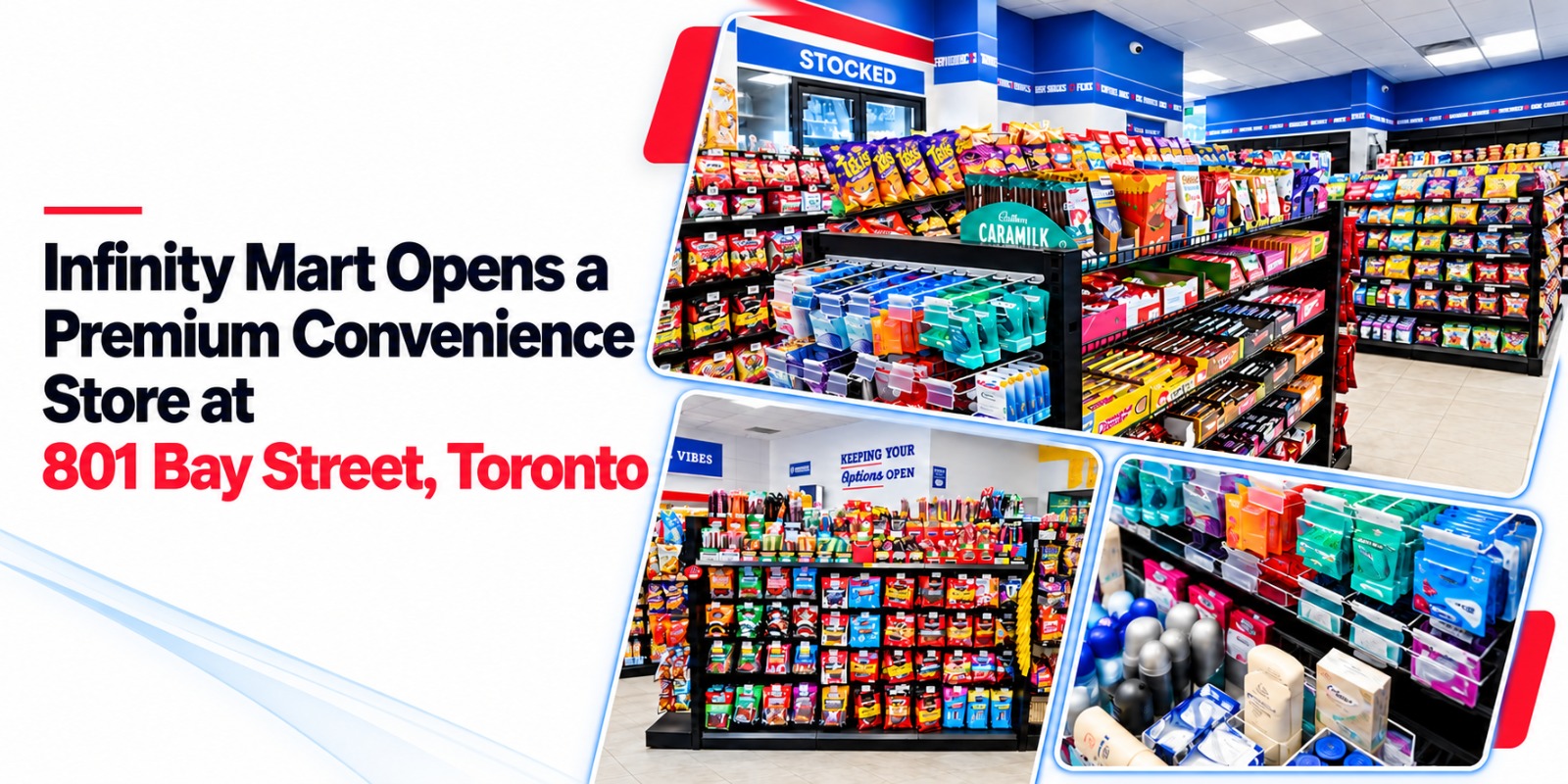
Infinity Mart Opens Premium Convenience Store at Bay Street
September 29, 2026
How Much Money Do You Need to Open a Convenience Store?
September 26, 2026