What Are the Pros and Cons of Owning a Convenience Store?
TL;DR
- Is it profitable? It can be, but profit depends heavily on category mix. Food and private-label items earn far more than fuel and tobacco.
- What’s the biggest advantage? Steady, necessity-driven demand plus multiple income streams under one roof.
- What’s the biggest risk? Thin margins combined with shrinkage, compliance costs, and the hours the business demands.
- Who does well at this? Hands-on owners who track numbers by category, not just total revenue, and treat compliance as a daily habit rather than an afterthought.
Quick answer: Owning a convenience store can be a strong investment because demand for everyday essentials rarely disappears, and a single store earns from several categories at once fuel, food, tobacco, lottery, and more. The trade-off is long hours, thin margins on the highest-volume items, and ongoing costs from shrinkage, staffing, and licensing. Whether it’s “worth it” comes down to a specific store’s numbers, not the industry average.
Pros and Cons at a Glance
Before the full breakdown, here’s the short version in table form, useful if you’re comparing this business model against others.
| Category | Pro | Con |
| Customer demand | Necessity-driven purchases (fuel, food, essentials) hold up even in a downturn | Demand alone doesn’t guarantee profit if margins aren’t managed |
| Revenue streams | Multiple categories (fuel, food, tobacco, lottery, delivery) reduce reliance on any one product | High-volume categories like fuel and tobacco carry the lowest margins |
| Cash flow | Transactions settle daily, giving more predictable week-to-week cash flow | Rising rent, wages, and utilities can erode margin even when sales stay flat |
| Startup timeline | Buying an existing store can generate income from day one | An underperforming store can mean a slower ramp-up than expected |
| Hours | Hiring a manager reduces daily hands-on work | Owners stay on call for staffing gaps, equipment issues, and emergencies |
| Loss prevention | Strong inventory controls keep shrinkage in check | Theft, spoilage, and counting errors quietly cut into profit if left unmanaged |
| Compliance | Established systems ease the licensing burden | Tobacco, alcohol, vape, and lottery sales require provincial licensing, with fines or suspension for violations |
| Growth potential | Strong performers can expand into food service, private label, or a second location | Competition from dollar stores, pharmacies, and grocers is narrowing the space |
| Long-term value | A well-run store builds sellable equity over time | Value depends on transferable systems, not just the previous owner’s relationships |
Quick summary: The pros generally come from steady demand, multiple revenue streams, and fast cash flow. The cons cluster around thin margins, compliance, and the hours ownership demands. The gap between those two columns is what due diligence is for.
Pros of Owning a Convenience Store
Consistent Customer Demand
People need gas, milk, and coffee on the way to somewhere else no matter what the economy is doing. That doesn’t guarantee profit on its own, but it does mean a convenience store’s customer base holds up better in a downturn than stores selling things people only buy when times are good. This is the foundation the rest of the business model is built on.
Multiple Revenue Streams
A single location can earn from fuel, packaged goods, tobacco and vape, lottery, food service, and delivery partnerships all at once. That spread is one of the format’s biggest strengths: a slow week in one category doesn’t have to sink the whole store, and a strong category can offset a weak one without you needing to do anything differently.
Strong Daily Cash Flow
Convenience stores run on cash and card transactions that settle fast, which means money moves through the business daily rather than on long invoice cycles. For owners, that translates into more predictable week-to-week cash flow than many other small business models offer, which makes it easier to plan payroll, restocking, and debt payments without waiting on receivables.
High Demand for Essential Products
Beyond general foot traffic, the specific products convenience stores sell food, drinks, basic household items, fuel are things people buy out of routine and necessity, not discretionary spending. That baseline demand is a big part of why the format has stayed resilient even as more retail shifts online; you can’t order a coffee on your commute from an app.
Flexible Business Opportunities
You’re not locked into one path. You can buy an existing independent store, take on a franchise with built-in systems, or combine a convenience store with a gas station. That range lets your entry point match your budget, experience level, and appetite for risk; a first-time owner and an experienced operator can both find a version of this business that fits.
Opportunity for Business Growth
A well-run store creates room to grow: adding foodservice, expanding private-label products, introducing a loyalty program, or acquiring a second location once the first is stable. Convenience retail rewards owners who reinvest in the categories that perform best rather than owners who leave the store running exactly as they bought it.
Build Long-Term Business Value
A convenience store with strong sales history, a good lease, and loyal customers becomes a sellable asset over time not just a paycheck. Owners who track performance by category and reinvest wisely build equity they can eventually cash out on, whether that’s through a sale, a franchise buyback, or expansion into more locations.
Cons of Owning a Convenience Store
Long Working Hours
Many convenience stores operate extended hours, and plenty run 24/7. Even with staff on the floor, ownership means you’re the one who gets the call when there’s a staffing gap, an equipment failure, or an emergency in the middle of the night. This is the trade-off buyers underestimate most often.
High Competition
Dollar stores, pharmacies, and grocery chains have all expanded into convenience-adjacent categories, narrowing the space that used to belong to standalone convenience stores. Standing out increasingly means competing on service, freshness, and speed rather than location alone and EV adoption raises a longer-term question for any store that leans heavily on fuel traffic.
Low Profit Margins on Some Products
The products that sell the most fuel and cigarettes usually carry the thinnest margins in the store. Real profitability comes from higher-margin categories like fresh food, coffee, and private-label goods, so a store leaning too heavily on high-volume, low-margin items can look busy on paper without actually being profitable.
Inventory Management Challenges
With hundreds of SKUs, some perishable, convenience stores require constant attention to ordering, stock rotation, and shelf space. Overstocking ties up cash you could use elsewhere; understocking loses sales to the store down the street. Getting this balance wrong quietly erodes margin over time, even when total sales look healthy.
Security and Theft Risks
Shrinkage from employee theft, shoplifting, and counting errors is a real, ongoing cost, not a hypothetical one. Stores with weak inventory checks or outdated security tend to feel it the most, and it’s one of the easiest costs for a first-time owner to underestimate because it doesn’t show up as a single line-item loss it’s death by a thousand small cuts.
Staffing and Employee Management
Convenience stores typically run on part-time and shift-based staff, which means frequent hiring, training, and scheduling. Turnover is common in this industry, and any gap in coverage a no-show, a sick call falls directly on the owner to fill, often on short notice.
Regulatory and Licensing Requirements
Tobacco, alcohol, vape, and lottery sales all come with licensing rules and age-verification requirements. In Canada, that means working within your province’s framework through bodies like the LCBO, OLG, or BCLC. A single violation can mean a fine or a suspended license, and either one hits revenue immediately. If you’re opening in Ontario specifically, our guide to convenience store licenses required in Ontario walks through the approvals you’ll need before you open.
Rising Operating Costs
Rent, utilities, insurance, and wages have all trended upward in recent years, squeezing margins that were already thin. Owners who don’t regularly reassess pricing and vendor terms can watch profitability erode even while sales stay flat; the store can be doing the same business and making less money.
How Much Does It Cost to Start a Convenience Store?
Startup costs vary widely depending on whether real estate is included, the store’s location, and whether it’s independent or part of a franchise system. Franchise ownership typically adds a franchise fee, buildout costs, and required opening inventory on top of the base purchase price. Buying an existing independent store usually costs less upfront but requires more due diligence, since you’re evaluating someone else’s numbers rather than a standardized package.
For a full cost breakdown with real ranges, see how much a convenience store franchise costs in Canada and our guide to what a franchise under $200K actually gets you. Exact figures should always be confirmed directly with the seller or franchisor rather than estimated from industry averages, since costs shift by region, lease terms, and whether fuel infrastructure is part of the deal.
Is Owning a Convenience Store Profitable?
It can be, but profitability depends far more on category mix than on the industry label itself. Stores that lean heavily on fuel and tobacco tend to show high revenue but low margin, while stores with a strong food program, fresh coffee, and private label products typically keep more of what they earn. Canada’s convenience store industry generated roughly $11.9 billion in revenue in 2024 across close to 9,400 businesses, and the sector has leaned further into food service in recent years as cigarette sales decline with falling smoking rates, a shift that’s reshaping where the profit actually sits inside the average store.
If you’re specifically weighing a franchised location rather than an independent store, our dedicated look at whether a convenience store franchise is profitable in Canada breaks down real startup cost ranges and typical annual profit for mature locations.
Essential Skills for Running a Successful Convenience Store
- Inventory discipline knowing what to stock, how much, and when to reorder without tying up cash in slow-moving product
- Basic financial literacy reading margin by category, not just total sales, so you know which parts of the store are actually making money
- Staff management hiring, scheduling, and retaining reliable shift workers in an industry with high turnover
- Customer service instincts convenience retail runs on repeat, local customers who notice when service slips
- Regulatory awareness staying current on provincial licensing for tobacco, alcohol, vape, and lottery sales
- Comfort with irregular hours being reachable for the calls that come outside a normal workday, without it burning you out
Tips to Maximise Convenience Store Profits
- Shift focus toward high-margin categories like fresh food, coffee, and private-label items rather than relying on fuel and tobacco volume alone.
- Tighten inventory controls with regular counts and modern point-of-sale tracking to catch shrinkage early, before it becomes a pattern.
- Negotiate vendor terms periodically instead of accepting the same agreements year after year just because they’re familiar.
- Invest in staff retention turnover costs more in lost time, training, and errors than most owners budget for.
- Add convenience-adjacent services like delivery partnerships or bill payment kiosks to bring in incremental revenue with little added overhead.
- Review pricing regularly against rising operating costs instead of waiting for margins to slip before acting.
Common Mistakes to Avoid
- Buying on revenue alone. Strong past sales can reflect the previous owner’s personal relationships with vendors and regular relationships that don’t automatically transfer to a new owner, which is why revenue can dip in year one even with nothing else changed.
- Treating an under-invested store as a dead end. Outdated equipment or a weak food program can be upside, not a red flag, for a buyer willing to reinvest often more upside than a store already running at full capacity.
- Ignoring category-level margins. High total revenue can mask a business that’s barely profitable once fuel and tobacco are factored out.
- Underestimating the time commitment. Hiring a manager reduces daily involvement, but it doesn’t remove the owner’s responsibility for compliance, financial oversight, and off-hours emergencies.
- Skipping the compliance check. Assuming licensing requirements from one province apply elsewhere is a common and costly mistake, especially for buyers relocating or expanding across provinces.
Who Should Consider Owning a Convenience Store?
This business tends to suit people who are comfortable being reachable outside normal hours, who want a business with fast cash flow rather than a slow ramp-up, and who are willing to manage details like inventory shrinkage and licensing compliance closely rather than passively. It’s a strong fit for hands-on operators and for franchise buyers who value a tested system over building one from scratch, and less of a fit for anyone looking for a purely passive investment. If you’re still deciding between paths, our 7 questions to ask before buying a convenience store franchise in Canada is a useful next step.
Frequently Asked Questions
Is owning a convenience store a good business to start?
It can be, depending on location, category mix, and how much of the revenue relies on low-margin items like fuel and tobacco. Stores with strong foodservice or fresh food sales tend to outperform fuel-only locations.
How much money do I need to buy a convenience store?
Costs vary based on whether real estate is included, the store’s location, and whether it’s independent or franchised. Franchise purchases typically add a franchise fee, buildout costs, and initial inventory on top of the base price.
What is the average profit margin for a convenience store?
Margins differ sharply by category: fuel and tobacco generate the lowest margins, while foodservice and private-label items generate higher ones. Overall profitability depends on how much revenue comes from each category.
Do convenience stores make good passive income?
Not typically. Most require active oversight around staffing, inventory, and compliance, even when a manager handles daily operations, and owners are usually still reachable for emergencies or major decisions.
How many hours a week does a convenience store owner typically work?
This depends on staffing levels and whether the store operates 24/7. Even with a manager in place, owners are often on call for staffing gaps, equipment issues, or compliance matters outside scheduled hours.
What licenses do I need to sell alcohol in a convenience store in Canada?
Alcohol licensing is regulated provincially, so requirements differ by region. In Ontario, for example, sales are tied to frameworks involving the LCBO and the Beer Store. Confirm current requirements with your provincial regulator before assuming eligibility. Our Ontario licensing guide covers what’s required before you open. Confirm current requirements with your provincial regulator before assuming eligibility.
Is it better to buy an existing convenience store or start one from scratch?
An existing store offers sales history, established customers, and immediate cash flow. Starting from scratch gives more control over location and setup but takes longer to generate revenue. Neither is universally better; it depends on risk tolerance and available capital.
What causes a convenience store to fail?
Common causes include poor location selection, thin margins on high-volume categories, inventory shrinkage, and failure to adapt to changing customer demand. Weak financial oversight during an ownership transition is also a frequent factor.
Do convenience stores need to sell fuel to be profitable?
No. Many profitable convenience stores operate without a fuel offering, relying instead on foodservice, packaged goods, and other categories, since fuel typically drives traffic more than profit.
What financing options exist for buying a convenience store?
Options can include traditional bank loans, small-business loan programs where applicable, seller financing, or franchisor-assisted financing. Availability depends on the buyer’s credit profile, deal structure, and whether real estate is included.
Ready to Buy a Convenience Store in Canada?
Thinking about buying a convenience store? The right decision comes down to the specific store’s numbers, not industry averages. If you’re weighing independent ownership against a franchise system, Infinity Mart’s team can walk you through what ownership looks like at one of our locations, including investment ranges, site selection, and what support looks like after you open.
Reach out at franchising@infinitymart.ca or +1 (289) 981-7288, or visit infinitymart.co to get started.
Table of Contents
Related post
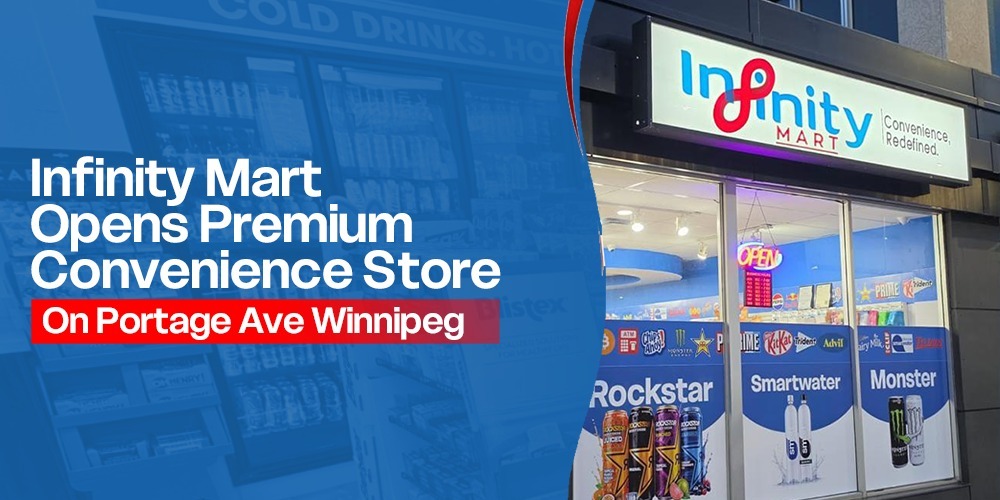
Infinity Mart Opens New Convenience Store on Portage Ave, Winnipeg
September 8, 2026
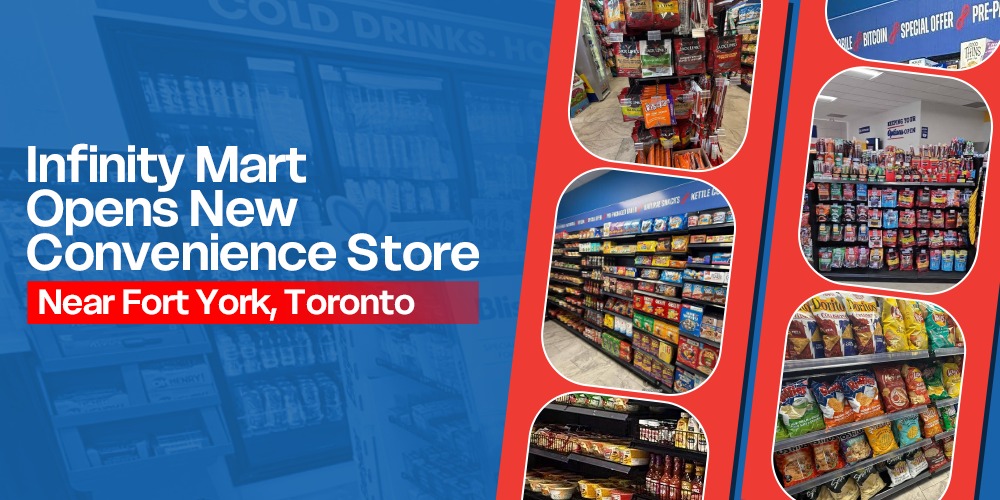
Infinity Mart Opens New Convenience Store Near Fort York, Toronto
September 2, 2026
Best Convenience Stores Open 24/7 Near Me in Toronto
August 18, 2026